.jpeg&w=3840&q=75)
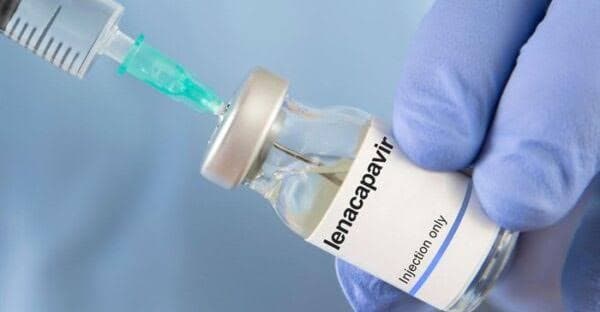
Seven out of every ten people who have started South Africa's new twice-yearly HIV prevention injection are women, and most of them are pregnant or breastfeeding, the country's Department of Health said in a statement on 8 September.
Of the 55,123 people initiated on lenacapavir by 7 September, just over three months after the injection became available nationally, women make up 71%, a group the department says has been prioritised because pregnancy and the postpartum period carry a heightened risk of HIV acquisition.
That skew is not incidental. It reflects a deliberate choice in how the drug was tested and how the rollout was designed.
Why women were built into this from the start
Lenacapavir's lead trial, involving adolescent girls and young women in South Africa and Uganda and published in the New England Journal of Medicine in 2024, was designed to allow participants who became pregnant to remain on study and generate pregnancy and breastfeeding safety data rather than excluding them from follow-up. Zero participants who received lenacapavir in that trial acquired HIV, 100% efficacy, and better protection than the existing daily pill regimen it was tested against.
A second, broader trial that enrolled men, transgender women, transgender men and non-binary people recorded two infections among 2,179 participants who received the injection, a rate 96% lower than the background HIV rate researchers had estimated for that group.
Put together, the trials showed that lenacapavir provides exceptionally high protection across different populations, including the adolescent girls and young women who made up the PURPOSE 1 trial.
The daily pill problem lenacapavir is trying to solve
South Africa already runs one of the largest HIV prevention pill programmes anywhere.
2.04 million people have started daily oral pre-exposure prophylaxis (PrEP) since 2016. But maintaining daily PrEP can be difficult for some people because of pill fatigue, stigma, competing demands and the need for regular access to healthcare. South Africa recorded approximately 150,000 new HIV infections in 2024, according to UNAIDS, with women and girls accounting for 59% of those infections.
Lenacapavir removes the daily requirement entirely: after two oral loading doses on days 1 and 2, a person needs only one follow-up injection every six months to stay protected.
Where the rollout has reached so far
Create a free account
Join Joseph Mmwa and be the first to know the world's biggest health and medical stories as they happen
Of the 55,123 people initiated nationally, Gauteng, the province home to Johannesburg and the capital Pretoria, accounts for more than 26,000, roughly half the national total.
KwaZulu-Natal follows with 11,941, then North West with 4,479, Western Cape with 4,446, Mpumalanga with 4,294 and Eastern Cape with 3,606.
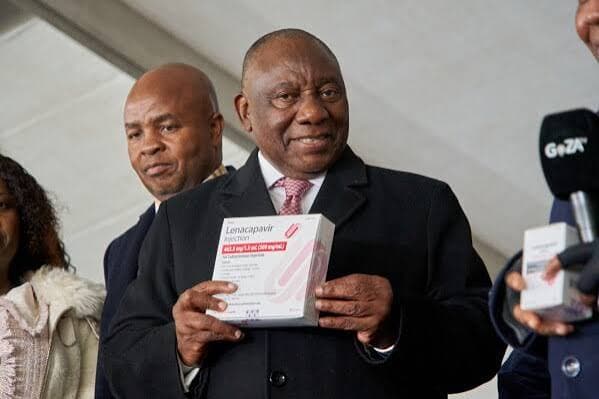
The programme was launched by President Cyril Ramaphosa and Health Minister Dr Aaron Motsoaledi on 5 June 2026, and now runs across 360 public health facilities in 24 districts, covering six of South Africa's nine provinces.
The Department of Health has not published a province-by-province breakdown of how many of each area's initiations are women, so it is not yet possible to say whether the 71% national figure holds evenly across the country or is concentrated in particular provinces.
Part of a larger regional push, with women at the centre of it
South Africa's approach sits inside a wider effort.
World Health Organization Director-General Dr Tedros Adhanom Ghebreyesus said in March 2026 that the WHO had supported nine countries, Eswatini, Kenya, Lesotho, Mozambique, Nigeria, South Africa, Uganda, Zambia and Zimbabwe, to begin offering lenacapavir within eight months of each other, and has described lenacapavir as one of the most powerful and promising tools in the history of HIV.
South Africa's regulator, the South African Health Products Regulatory Authority, approved and registered lenacapavir on 27 October 2025, becoming the first regulator on the continent to do so, after the WHO prequalified the injectable and tablet forms of the drug on 6 October 2025.
What a 71% figure can and can't tell us
Here is the honest limit of what these numbers show: they describe who has started the injection, not who has been protected from HIV as a result.
The Department of Health has said it is tracking commodity supply, service quality, client follow-up and safety alongside provincial health departments, and that full evidence of impact will only emerge with time.
A high proportion of women taking up a prevention option that was tested specifically on them is a strong early sign that the rollout is reaching the group it was designed for.

Related Stories
More Than 55,000 South Africans Start New HIV Prevention Injection Lenacapavir In Just Over 3 Months
Egypt's Minapharm Advances African-Led Ebola Vaccine as DRC Outbreak Spreads
Namibia inaugurates first public-sector MRI machine since independence
New TB Vaccines Could Save 7.3 Million Lives by 2050, Gavi Says
Comments
Be the first to comment.