.jpeg&w=3840&q=75)
Lenacapavir Reaches Nearly 100,000 People Across Nine African Countries Within Months
The Global Fund says 24 countries worldwide are expected to receive the game-changing HIV prevention injection with its support, alongside that of the United States and other partners, by the end of this year
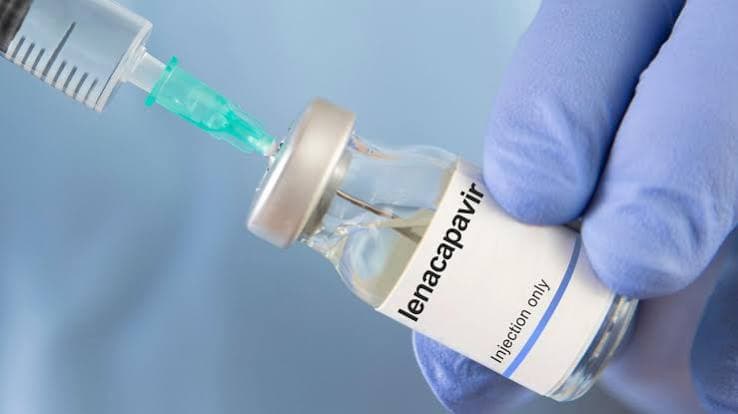
By mid-August 2026, nearly 100,000 people across nine high-burden African countries, Eswatini, Kenya, Lesotho, Mozambique, Nigeria, South Africa, Uganda, Zambia and Zimbabwe, had received lenacapavir, the new twice-yearly injectable HIV prevention drug, according to a report published on September 16,2026 by Global Fund, the international body that raises and distributes money to fight HIV, tuberculosis and malaria worldwide.
The pace has been unusually fast.
Less than a year after the Global Fund announced a coordinated rollout plan, the medicine arrived in Eswatini and Zambia in November 2025, with the first doses given a month later.
By the end of May 2026, 20,000 people had received it.
That number more than doubled to 49,000 by the end of June, then climbed to nearly 100,000 across the nine countries by mid-August.
The Global Fund has not published a country by country breakdown of that total.
A Break From the Old Pattern
For decades, new HIV medicines followed a painful pattern.
A drug would reach wealthy countries first, and people in Africa, where the epidemic has hit hardest, would wait years before it reached them too. In 2025, lenacapavir broke that pattern.
It became the first HIV prevention innovation to reach both high income and lower income countries in the same year, the Global Fund says, describing it as a deliberate departure from the delays that slowed earlier HIV treatments.
That happened through coordinated work between the Global Fund, Gilead Sciences (the company that makes the drug), the United States government, the Children's Investment Fund Foundation, the Gates Foundation, Unitaid, the World Health Organization and UNAIDS, the United Nations agency that coordinates the global response to HIV.
The Global Fund says it used its experience shaping health markets to help bring the price down, arrange financing, strengthen supply chains, and work with governments and communities to build awareness and uptake.
What the Trials Found
Lenacapavir is given by injection under the skin once every six months, instead of a daily pill.
In a trial of more than 5,300 young women in South Africa and Uganda, published in the New England Journal of Medicine in 2024, no one who received the injection contracted HIV during the trial's main year long comparison, a result described at the time as 100 percent efficacy.
A second trial, published in the same journal in 2025 and involving more than 3,000 men and gender diverse people across seven countries, found the injection cut new infections by 96 percent compared with what would normally be expected in that population, and by about 89 percent compared with the daily pill form of prevention.
Those results remain some of the strongest ever recorded for an HIV prevention product. But longer follow up, presented at the Conference on Retroviruses and Opportunistic Infections in Denver, Colorado, in February 2026, found a small number of breakthrough infections in both trials among people who had received every injection on schedule.
Create a free account
Join Joseph Mmwa and be the first to know the world's biggest health and medical stories as they happen
Researchers linked these rare cases to a specific mutation in the virus, called N74D, that can make it resistant to the drug.
That finding does not undo lenacapavir's exceptional trial results, but it means no HIV prevention tool, including this one, offers an absolute guarantee, and it is why health workers still test people for HIV before every injection.
Bringing the Price Down
A highly effective injection only helps people who can get it and afford it.
In South Africa, the Global Fund redirected 29 million dollars in existing funding to secure roughly 500,000 person years of the drug at 60 dollars per person per year for 2026 and 2027, the subsidised price negotiated for the country's public HIV programme.
Longer term, Gilead has granted six manufacturers free licenses to produce cheaper generic versions for around 120 mostly low and lower middle income countries, including South Africa.
Two of those manufacturers have agreed to an introductory price of 40 dollars per person per year, plus a one time 17 dollar charge for the starting pills.
A costing analysis published in 2024 and updated in 2026 estimated the price could eventually fall to around 25 dollars per person per year if global demand reaches 5 to 10 million people.
The Global Fund expects generic supply to begin reaching markets by the end of 2026, with wider uptake through 2027.
What Wider Access Could Mean
A study focused on South Africa, led by health economist Lise Jamieson of the University of the Witwatersrand and published in the journal PLOS Medicine in July 2026, modelled what happens if lenacapavir reaches far more people.
It found that providing the injection to close to two to three million South Africans a year could prevent between 19 and 31 percent of new HIV infections over the next twenty years, and could get the country to the point of near eliminating new infections as much as 10 to 14 years sooner than if nothing changes.
The same study found the biggest gains per dose came from prioritising sex workers and men who have sex with men.
A separate, earlier study covering South Africa, Zimbabwe and western Kenya together, published in the Lancet HIV in 2024, had projected that scaling up the injection more broadly across the region could prevent as much as a third of new infections in some settings.
The Global Fund has pointed to that regional projection, alongside the newer South African findings, in describing lenacapavir's long term potential.
Both are model based projections built on assumptions about coverage and continued use, not something that has already happened, and Jamieson's team cautions that the real gains will depend on whether the medicine keeps reaching the people most at risk of HIV.
The Global Fund says 24 countries worldwide are expected to be receiving lenacapavir with its support, and that of the United States and other partners, by the end of this year.
Sources: The Global Fund, 16 September 2026, and Global Fund/U.S. update, 14 April 2026; Jamieson L, Johnson LF, Imai-Eaton JW, Subedar H, Bekker LG, Meyer-Rath G. Optimising scale-up of injectable lenacapavir for HIV pre-exposure prophylaxis in South Africa: a modelling study and economic evaluation. PLOS Medicine. 2026;23(7):e1004882.
Originally reported by Global Fund. View original source

Related Stories
Shingles Vaccine Builds Strong Antibody Protection in People With HIV, Study Finds
Fiji Declares HIV Outbreak a National Crisis as New Infections Hit Record High
TB Preventive Treatment Linked to 61% Lower TB Risk and 45% Lower Death Risk in People With HIV
For 41 Million People Living With HIV Treatment May Soon Mean Freedom From Taking Daily Pills
Comments
Be the first to comment.