Liberia's Ministry of Health recruited the country's most followed social media stars to fight a wave of vaccine disinformation, and the resulting campaign has reached 665,958 girls aged 9 to 18 with a vaccine that protects against cervical cancer, exceeding its target, according to Gavi VaccinesWork, the news site of Gavi, the Vaccine Alliance, a global health partnership that funds vaccine access in lower-income countries.
The push began in November 2025, when the ministry and its partners launched a nationwide campaign covering two vaccines at once: the human papillomavirus (HPV) vaccine, which protects against the virus behind most cervical cancer cases, and the malaria vaccine, whose earlier rollout had shown that many families still didn't understand what it was for.
Rather than relying only on posters and radio spots, officials turned to people whose faces were already familiar to millions online.
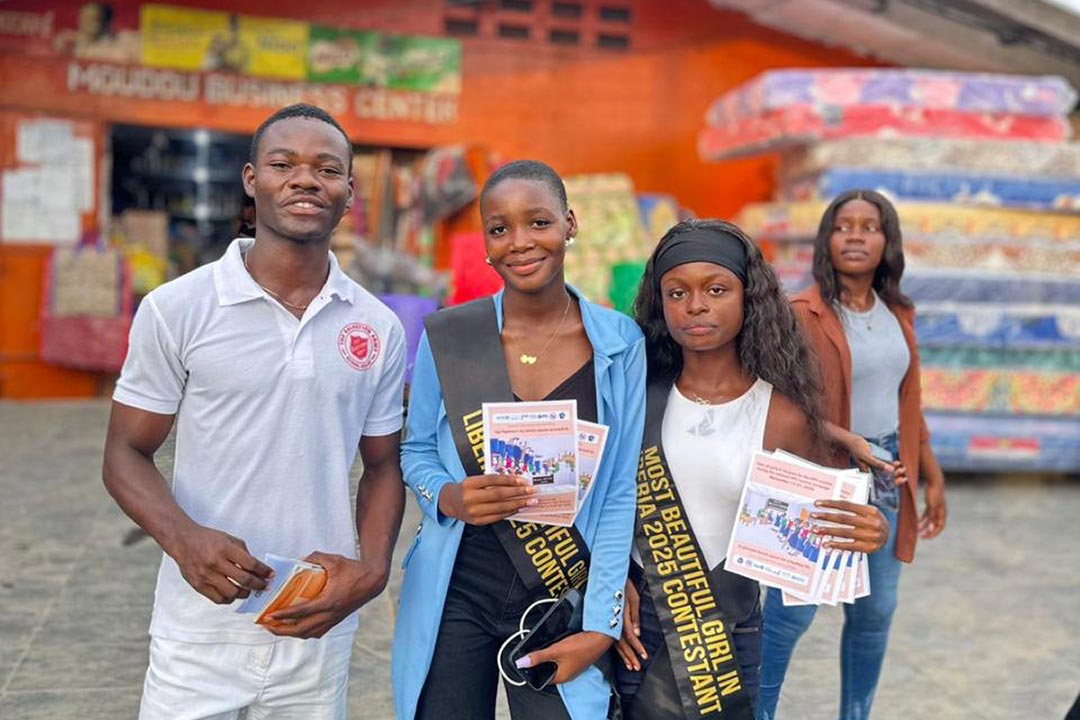
One of them was Goretti L. Itoka, a model, former Miss Mano River Union, and current host of the Most Beautiful Girl in Liberia pageant.
Gavi's Tina S. Mehnpaine, who interviewed Itoka for the original account of the campaign, reported that Itoka grew up in a household that took vaccination seriously, and had already spoken out for immunisation before the ministry approached her.
This time, Itoka said, the stakes felt higher, with false claims about the vaccine spreading fast on the same platforms where she'd built her following.
Liberia's online space had been filling up with anti vaccine posts designed to scare parents away from vaccinating their daughters.
The most damaging rumour, repeated again and again, was that the HPV vaccine makes girls infertile.
There is no scientific basis for that claim.
Amadu Bah, of the ministry's Communications and Health Promotion team, explained at the campaign's launch that social media was the best way to reach people who don't respond to more traditional health messaging, according to Gavi VaccinesWork's reporting.
The ministry brought in Itoka and other well known influencers and comedians, including the popular Mama Liberia comedy group, and split them into two teams, one focused on HPV, the other on malaria. ,
Jhpiego, an international health organisation affiliated with Johns Hopkins University that provided technical support to the ministry, trained the influencers so their messaging stayed accurate and consistent.
SUPPORT INDEPENDENT JOURNALISM
Help keep health journalism independent
I report and explain important health and medical stories independently, with accuracy, context and African relevance. Your support helps me continue this work.
Matirankie M. Kanneh of Jhpiego Liberia told Gavi VaccinesWork that influencers were chosen for their ability to reach large audiences, particularly young people, parents and caregivers, with timely, credible information, and that they worked alongside traditional media outlets to build trust and strengthen how rumours were tracked and answered.
Itoka didn't work alone.
Current contestants from the Most Beautiful Girl in Liberia pageant joined her, visiting marketplaces and other public gathering spots to talk directly to parents and girls about the vaccine, and posting videos on Instagram and TikTok that drew millions of views.
Ateanah Togbah, a graduating criminal justice student who went on to win the pageant, was one of them.
She described the campaign to Gavi VaccinesWork as one of the most meaningful parts of her time as a contestant, saying it deepened her sense of purpose.
"The campaign transformed me," she said.
For both women, the cause was personal. Liberia records more than 700 new cervical cancer cases a year, according to the World Health Organization's cancer research arm, and close to 480 of those women die, a fatality rate of around 66 percent.
Cervical cancer is almost always caused by HPV, and the vaccine works by protecting girls before they're ever exposed to the virus, which is why health officials focus on reaching them in childhood rather than later in life.
The campaign reached 665,958 girls in the 9 to 18 age group, more than officials had aimed for.
Gavi VaccinesWork reported that it's difficult to say exactly how many of those vaccinations happened because an influencer convinced a parent, rather than because of the ministry's wider outreach, radio campaigns, or community health workers, and that even Itoka acknowledges this while still calling the result a success worth building on.Itoka said she has not stopped meeting resistance.
The infertility rumour, according to Gavi's reporting, found her and her team again and again during their outreach, and each time they corrected it and explained the danger of leaving girls unprotected.
Liberia's experience mirrors a wider pattern across countries introducing newer vaccines: health authorities increasingly working with local influencers, rather than only government spokespeople, to reach young parents who get most of their information from social media rather than clinics or newspapers.
.jpeg)