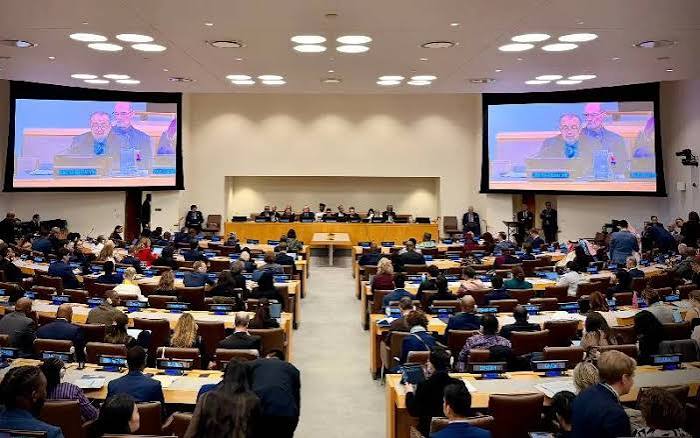
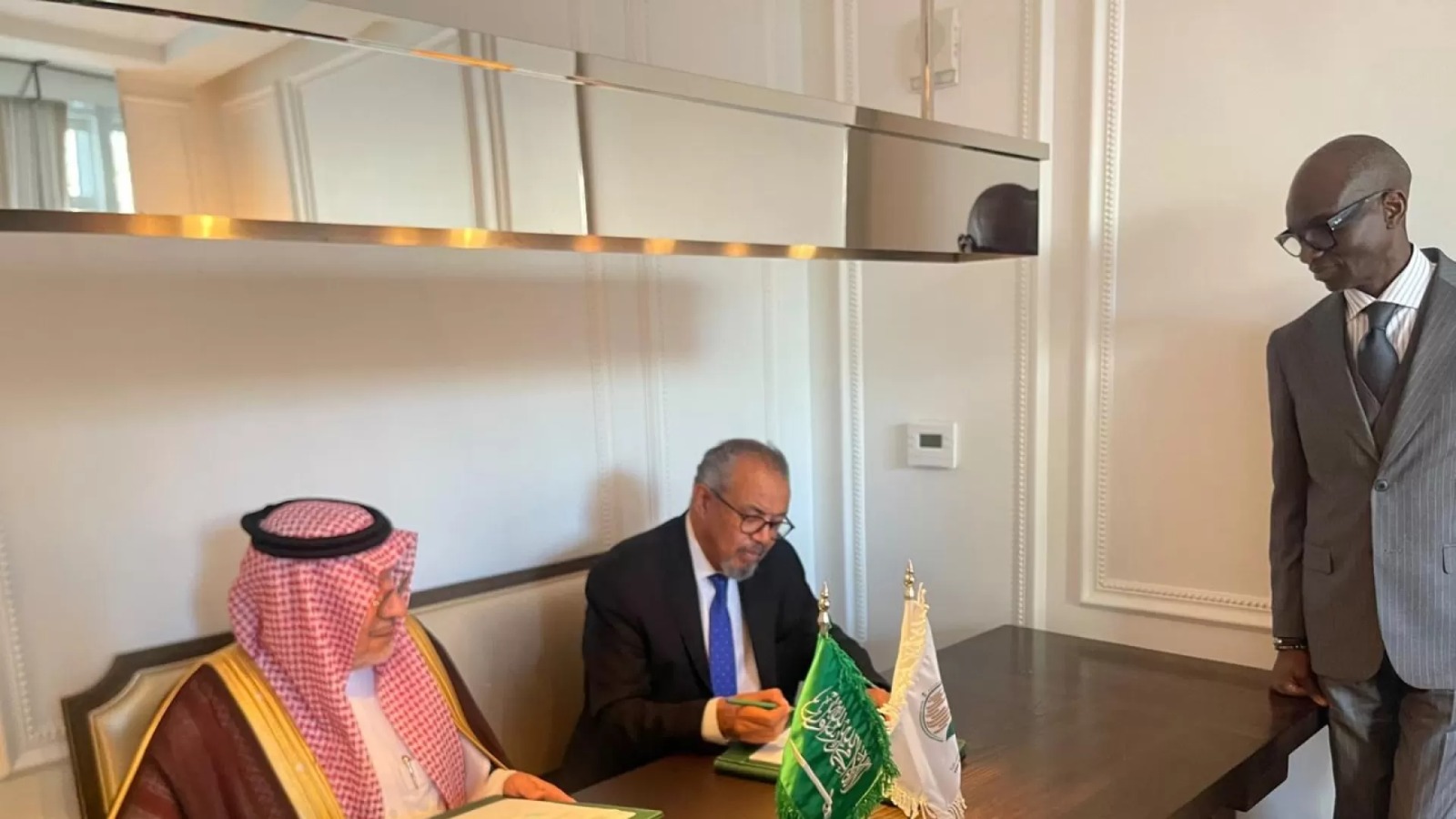
World leaders gathered at the United Nations headquarters in New York on 25 September 2026 to renew their promise to protect the world from the next pandemic, three years after they first made the same promise.
The meeting was the second of its kind.
The United Nations General Assembly first held a High-level Meeting on Pandemic Prevention, Preparedness and Response in 2023, shortly after COVID-19 had torn through health systems worldwide.
This year's meeting reviewed how much of that 2023 promise had been kept, and pushed governments to finish the parts that had not.
Opening the discussion, World Health Organization Director-General Dr Tedros Adhanom Ghebreyesus reminded leaders of what COVID-19 had actually cost the world.
The World Health Organization says the pandemic was linked to more than 20 million excess deaths between 2020 and 2023, deaths beyond what would normally have been expected in that period, even after accounting for other causes.
It also wiped out more than 10 trillion US dollars from the global economy, money that could otherwise have gone into schools, roads, hospitals or wages.
"The COVID-19 pandemic exposed and exacerbated the fault lines of global health security, and taught the world many painful lessons," Dr Tedros told the meeting.
Leaders did point to real progress.
Since the first high-level meeting, countries adopted the WHO Pandemic Agreement, a treaty meant to bind nations to work together the next time a new disease threatens to spread across borders, rather than compete for vaccines and medicine as many did during COVID-19.
Countries have also updated the International Health Regulations, the rulebook that governs how nations report and respond to disease outbreaks that could cross their borders.
New centres have been set up to watch for early signs of outbreaks, to share disease-causing pathogens between countries for research, and to manufacture vaccines, treatments and tests locally rather than relying on a handful of wealthy nations to produce them, as happened with COVID-19 vaccines.
Despite that progress, one major piece of the agreement is still not finished.
SUPPORT INDEPENDENT JOURNALISM
Help keep health journalism independent
I report and explain important health and medical stories independently, with accuracy, context and African relevance. Your support helps me continue this work.
Countries are negotiating an annex, an additional, legally binding section, to the WHO Pandemic Agreement, called the Pathogen Access and Benefit-Sharing system.
It is meant to set clear rules for how a dangerous pathogen found in one country gets shared quickly with researchers worldwide, and how the benefits that come from that sharing, vaccines, treatments, tests, get shared back fairly, instead of going first to whichever country can pay the most.
United Nations Deputy Secretary-General Amina Mohammed, speaking on behalf of UN Secretary-General António Guterres, said the system was essential and could not wait.
"The Pathogen Access and Benefit Sharing System, under negotiation, is critical to unlocking the full potential of the WHO Pandemic Agreement.
There is no time to waste," she said. "Let's get it done."
The stakes attached to finishing that negotiation are specific: countries need the annex adopted at the next World Health Assembly, WHO's main annual decision-making meeting, set for May 2027, before individual governments can begin the process of formally signing on to the wider Pandemic Agreement itself.
Several leaders used the meeting to stress that keeping the world safe from the next pandemic cannot be left to health ministries alone.
Dr Khalilur Rahman, President of the UN General Assembly's current session, said protecting people requires fair and fast access to vaccines, tests and treatment, stronger health systems on the ground, and closing the funding gaps that leave some countries unable to respond in time.
Ambassador Amar Bendjama, President of the UN's Economic and Social Council, the UN body that coordinates economic, social and related work across the organisation, connected pandemic readiness directly to broader development goals, saying it needs sustained money behind it, not just political statements made once every few years.
The meeting produced a Political Declaration, a formal statement of intent that will be forwarded to the wider UN General Assembly.
It commits countries to concrete action on strengthening national health capacities, investing in health systems, and expanding fair access to pandemic tools.
It does not, on its own, finish the Pathogen Access and Benefit-Sharing negotiations.
What happens between now and May 2027, when the outstanding annex is due for adoption, will determine whether this second declaration holds up better than the first.
.jpeg)