.jpeg)
Almost $3 billion has been promised to support the Ebola response in the Democratic Republic of Congo, while the virus has spread into two more areas of the country.
Africa Centres for Disease Control and Prevention (Africa CDC), the continents top health agency, said in a press release issued from New York and Addis Ababa on 24 September 2026 that about $2.9 billion had been committed, in cash and in kind.
Bloomberg reported the same day that the total had reached nearly $3 billion, citing Africa CDC.
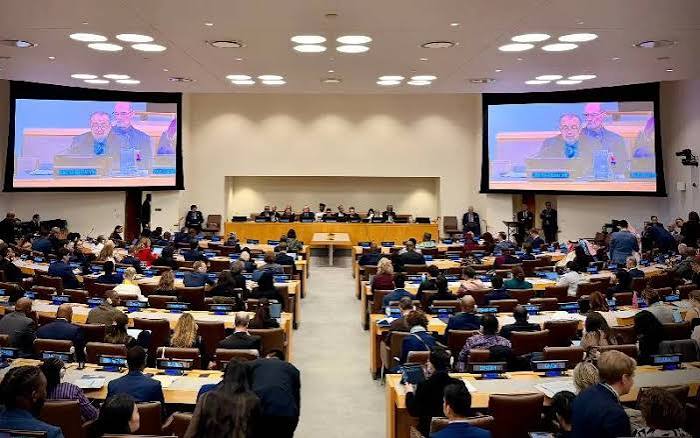
The commitments were announced in connection with a meeting in New York on 23 September, held alongside the United Nations General Assembly.
The United States called the meeting, and it brought together the governments of Congo and Uganda, members of the G20 group of countries and their partners, and international organisations.
Who is putting in the money
Africa CDC's release names the United States as the biggest contributor, at $886 million. Reuters reported on 23 September that senior State Department officials had pledged a further $267 million on the sidelines of the General Assembly, bringing the US commitment to that figure.
The European Union and European Commission follow with $568 million, then the World Bank with $433 million, and African countries together are listed at $110 million.
According to the Africa CDC release, Allison Hooker, the US Under Secretary of State, told the New York meeting on 23 September that resources must be turned quickly into treatment, disease tracking, contact tracing, protective equipment and other lifesaving work.
Contact tracing means finding people who may have been exposed to a patient and following them for signs of illness.
A tracking system for the cash
Dr Jean Kaseya, Director-General of Africa CDC, said in the 24 September release that "pledges alone will not stop Ebola."
He said every dollar must be traced from commitment to payment to the services delivered to affected communities.
The release said the meeting's success will be measured by how quickly resources are disbursed, where they are deployed and what they deliver.
It said Africa CDC will strengthen its Financial Tracking Mechanism, working with the Congolese government and WHO, to follow the commitments through to results.
Two more districts join the list
The World Health Organization (WHO) said in its Disease Outbreak News report of 25 September that two more health zones have been affected since its last update on 11 September.
A health zone is a local health district, the area one team of health workers looks after.
is Bulu, in Sud Ubangi province in the north-west, the first case in a province that had not reported the disease before.
The other is Dungu, in Haut-Uélé province on the border with South Sudan.
That brings the outbreak to 63 health zones across seven provinces.