A Kenyan pathologist has been named in a new international Hall of Fame, and the work behind the honour begins with a question that has little to do with awards: how long should a patient wait to learn what is wrong?
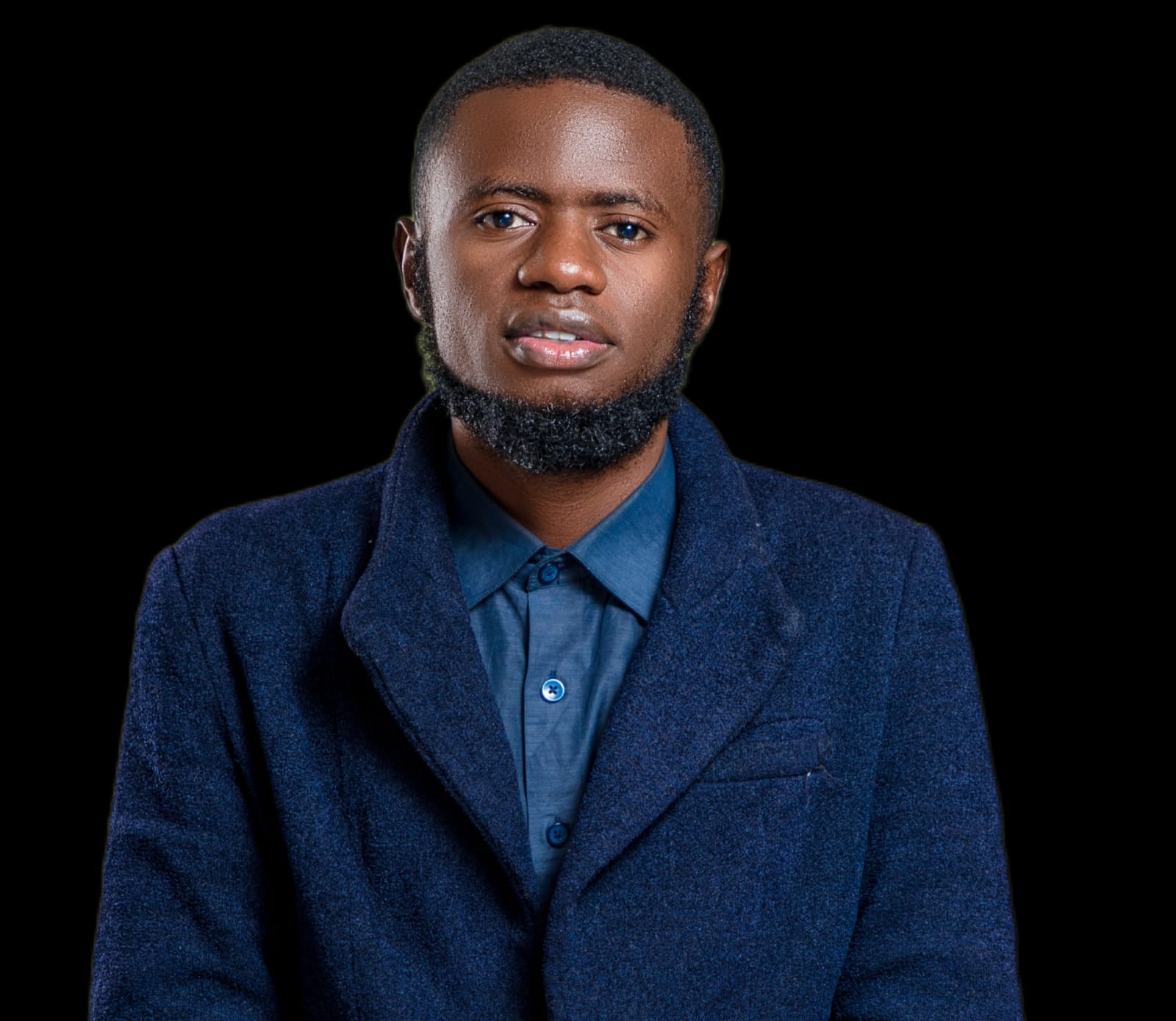
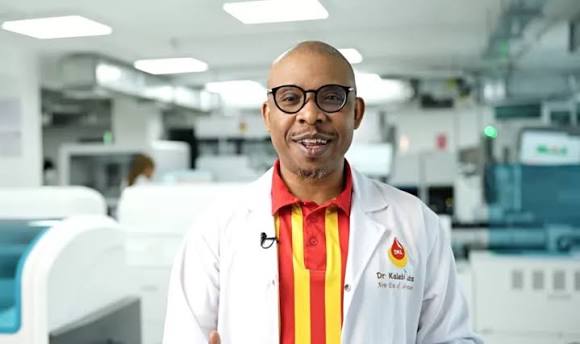
Dr Ahmed Kalebi's name was announced on 19 October 2026 in the first Hall of Fame of The Pathologist, an international publication covering pathology and laboratory medicine.
Pathologists work behind the scenes, in the laboratory where a sample of blood or tissue becomes the result that decides what happens next.
Kalebi now runs Dr Kalebi Labs in Nairobi, and what that work could mean for patients in Kenya is the story worth following.
How does a pathologist earn a place in a Hall of Fame?
The magazine announced the Hall of Fame in a piece by Helen Bristow, an author for The Pathologist .
She wrote that it gives permanent recognition to anyone named five or more times on the magazine's annual Power List, and also remembers colleagues who have died.
The Power List names influential people in pathology, chosen by a panel of judges.
Kalebi qualifies with six appearances.
The Star, a Kenyan daily newspaper, listed them as 2019, 2020, 2021, 2024, 2025 and 2026.
The announcement said he is celebrated for his ambition to advance laboratory technology where resources are limited.
Others named include Marilyn Bui, a director of the Digital Pathology Association, and Andrew Janowczyk, whose work focuses on trustworthy artificial intelligence in clinical laboratories.
David Wells led the laboratory response to COVID-19 for NHS England, the public health service in England. Christopher Fletcher, a tumour pathologist, died in 2024.
Richard Scolyer ,a renowned Australian melanoma pathologist who died on 7 June 2026 was also among the 15.
The Star also reported that Kalebi is the only African among the 15. The magazine's announcement does not make that comparison.
"Africa has exceptional talent in pathology, science and laboratory medicine," Kalebi said, according to The Star.
Where does the waiting happen? A look at Kisumu
One hospital in western Kenya shows what is at stake.
Jaramogi Oginga Odinga Teaching and Referral Hospital is in Kisumu city.
It is a main referral hospital for Kisumu and several neighbouring counties.
In 2025 the hospital ran a subsidised breast cancer programme with the Africa Cancer Foundation, Matibabu Foundation and Tiba Foundation.
Women had a needle biopsy within a day of making contact, 0.22 days on average, but the laboratory result then took 21.4 days on average, and only 8.65% of results met the programme's 10-day target.
In plain terms, the sample was taken quickly and the answer took about three weeks.
A follow-up laboratory test on the tissue, immunohistochemistry, took 11.3 days on average.
The women had waited long before reaching the hospital.
The typical delay before diagnosis was eight months, they had visited 3.79 hospitals or hospital visits on average, and three in four reported money as a barrier.
Seventeen of the 104 women with invasive breast cancer died during follow-up.
The abstract does not say whether the laboratory wait played a part.
Albert Ng'ong'a and colleagues reported these figures in an abstract for the Miami Breast Cancer Conference.
It covers one hospital in 2025, not Kenya as a whole, and it says nothing about Dr Kalebi Labs.
From Kibra to the microscope
The Nation, a Kenyan daily, reported that Kalebi grew up in Kibra, a low-income settlement in Nairobi, and attended Jamhuri High School.
Quoting The Pathologist's 2019 profile of him, it reported that he chose pathology over surgery after being asked to examine a tumour during a student elective in Durban, South Africa.
He studied medicine and trained in pathology at the University of Nairobi, then took a fellowship in anatomical pathology at the University of the Witwatersrand in Johannesburg, South Africa.
What did Garissa teach him?
Kalebi described the next step in his 2025 Power List entry. In 2005, newly qualified, he was posted as the first government pathologist to Garissa Provincial General Hospital, in north-eastern Kenya near the Somali border, and asked to build up its laboratory.
He wrote that blood counts and liver and kidney tests were unavailable, equipment was broken, reagents had run out and clinicians distrusted the laboratory.
He wrote that he rebuilt it within three months and that the hospital then qualified as an internship training site. Those details rest on his account alone.,
The Nation described his time there as brief.
The deeper problem, he wrote, was that no referral routes existed for specialised tests such as tissue examination, bone marrow evaluation and immunoassays, in either the public or private sector.