.jpeg&w=3840&q=75)
Fiji Declares HIV Outbreak a National Crisis as New Infections Hit Record High
Ministry of Health estimates put HIV prevalence at about one in every 60 adults in the country
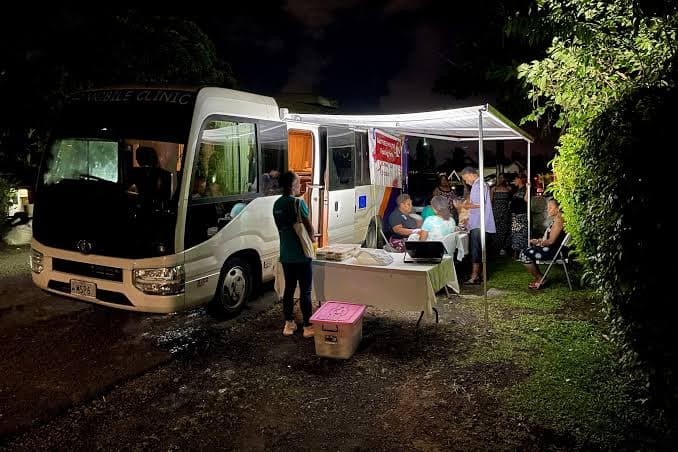
A Medical Services Pacific Moonlight program team offering free HIV testing during an outreach visit to a suburb of Suva, Fiji, on March 19, 2026. AFP/Getty Images via CNN
Fiji, a small island nation of less than one million people, has declared a national HIV crisis after new HIV infections hit a record high.
The response is now unfolding in two stages. On September 10, Cabinet endorsed declaring the outbreak a "national crisis" under emergency powers, Information Minister Lynda Tabuya said on behalf of Prime Minister Sitiveni Rabuka, according to Fiji Sun.
Five days later, on September 15, Health Minister Dr Ratu Atonio Lalabalavu went further and formally declared a national HIV emergency in a pre-recorded video statement, RNZ reported.
Two Declarations, One Worsening Trend
Tabuya's Cabinet-level statement was direct: "Cabinet has endorsed declaring the HIV outbreak a national crisis.
''So, we are declaring it a national crisis under emergency powers," she said, according to Fiji Sun.
She said the situation required an urgent, whole of government and whole of society response, not one confined to the health ministry.
Lalabalavu's video statement five days later escalated that further.
"An outbreak-level response is no longer sufficient. The Ministry of Health cannot meet this challenge alone," he said, according to FBC News.
He said the decision was backed by the Prime Minister and Cabinet because of the seriousness of the epidemic, RNZ reported.
The Numbers Behind the Decision
The two declarations cited slightly different case counts, both from Ministry of Health figures.
Fiji Sun reported 2,016 new HIV diagnoses in 2025, up from 1,583 in 2024, a figure used around the September 10 Cabinet decision.
In his September 15 video statement, Lalabalavu himself cited 2,060 new diagnoses for the same year, RNZ and CNN reported.
Either figure represents the highest annual total since HIV surveillance began in Fiji.
Lalabalavu also gave the clearest picture yet of how fast prevalence has grown:
"Five years ago, the estimate was one in 167," he said.
Government estimates now put HIV prevalence in Fiji at about one in every 60 adults, according to RNZ, Fijivillage and Xinhua.
HIV prevalence among women attending antenatal care has risen to about 2 percent, Xinhua reported.
Fiji has a population of under one million people.
To be clear about what the one-in-60 figure covers: it is a government estimate of everyone believed to be living with HIV, not only those who have been formally diagnosed.
Fiji Sun reported that 3,535 people were on record as living with HIV by the end of 2025, of whom 1,979 were receiving antiretroviral therapy, the medication regimen that suppresses the virus.
That gap between the estimated true number and the diagnosed number matters: Renata Ram, Fiji adviser for the Joint United Nations Programme on HIV/AIDS (UNAIDS), told CNN that only around 39 percent of people living with HIV in Fiji know their status, and less than a quarter, 22 percent, are on treatment.
Left untreated, HIV can progress to AIDS, leaving the body vulnerable to infections and cancers it would otherwise fight off.
Create a free account
Join Joseph Mmwa and be the first to know the world's biggest health and medical stories as they happen
Deaths and the Toll on Children
Ministry of Health figures reported by Fiji Sun and FBC News recorded 117 HIV-related deaths in Fiji in 2025, up from 25 in 2021.
Of those 117 deaths, 67 people were diagnosed and died within the same year, and 17 were children under 15, according to Fiji Sun.
Children have been hit hard by the outbreak in a second way: through new infections, not only deaths.
The Ministry of Health recorded 67 paediatric HIV diagnoses in 2025, up sharply from 32 in 2024, Fiji Sun reported, with 56 of those cases linked to mother-to-child transmission.
Separately, the aid group Save the Children Fiji told CNN that 59 babies acquired HIV from their mothers last year, a close but not identical figure from a different source, and said a two-month-old infant had become the youngest person yet identified living with both HIV and tuberculosis, a combination that is especially dangerous because HIV weakens the immune system's ability to fight the second infection.
What Is Driving the Spread
Health officials and UNAIDS point to two main routes of transmission.
The first is sexual contact, which Ram linked to low condom use and stigma in comments to CNN.
The second, and the one authorities describe as rapidly accelerating, is injecting drug use, particularly needle sharing tied to a surge in methamphetamine trafficked through Fiji as a transit point toward Australia, New Zealand and parts of Asia, CNN reported.
This marks a shift from how HIV has typically spread in the Pacific region, where sexual transmission has usually dominated.
A rise driven significantly by drug use changes what response works: testing and treatment campaigns built only around sexual health services will miss people whose risk comes from sharing needles.
Where the System Is Falling Behind
Fiji Sun reported that 845 people newly diagnosed with HIV in 2025 were not enrolled in care and treatment during the year, out of the 2,016 total new diagnoses that year.
Diagnosis alone does not stop the virus from spreading or progressing; without enrollment in a treatment programme, a person cannot start antiretroviral therapy.
The Ministry of Health said strengthening early testing, treatment access and retention in care would be critical to reducing deaths and preventing new infections among children, according to Fiji Sun.
What the Government Plans to Do
The response includes a formal needle and syringe exchange programme, aimed at reducing transmission among people who inject drugs, alongside expanded HIV testing and treatment capacity, wider access to pre-exposure prophylaxis (PrEP), a preventive medicine taken by HIV-negative people to lower their risk of infection, and long-acting injectable prevention options given periodically rather than daily, according to Xinhua and CNN.
Lalabalavu said the government would also resolve the regulatory approvals needed for these programmes, train health workers to deliver them, secure medical supplies, and strengthen engagement with affected communities.
In his video statement, Lalabalavu urged anyone who may have been exposed, including through shared needles or sex without a condom, to come forward for testing rather than wait until symptoms appeared, and asked Fijians not to shame or exclude people because of their HIV status, saying stigma drives people away from services that could help them, according to CNN.
What Remains Unclear
Two figures in this account come from different sources that do not fully agree: Fiji Sun's Ministry-sourced count of 56 mother-to-child HIV transmissions in 2025, and Save the Children Fiji's figure of 59, reported separately by CNN.
Both point to the same trend, a sharp rise in infections passed from mother to child, but the exact total has not been reconciled in a single official release.
Separately, government estimates of overall HIV prevalence, built on modelling, run well above the number of people who have actually been diagnosed and entered into care, a gap UNAIDS says means the true scale of the outbreak is likely still undercounted.

Related Stories
TB Preventive Treatment Linked to 61% Lower TB Risk and 45% Lower Death Risk in People With HIV

Japan Sets Record as People Aged 100 Surpass 100,000

Ethiopia becomes first African Country with a WHO-classified Civilian Emergency Medical Team
Chile Becomes First South American Country to Eliminate Dog-Transmitted Rabies, WHO Confirms
Comments
Be the first to comment.