Kenya is set to receive the first batch of a new malaria drug in November, with four counties expected to start using it in January.
The move follows research that found changes in malaria parasites that may help them survive treatment for longer, raising concerns about the drugs Kenya has relied on since 2006.
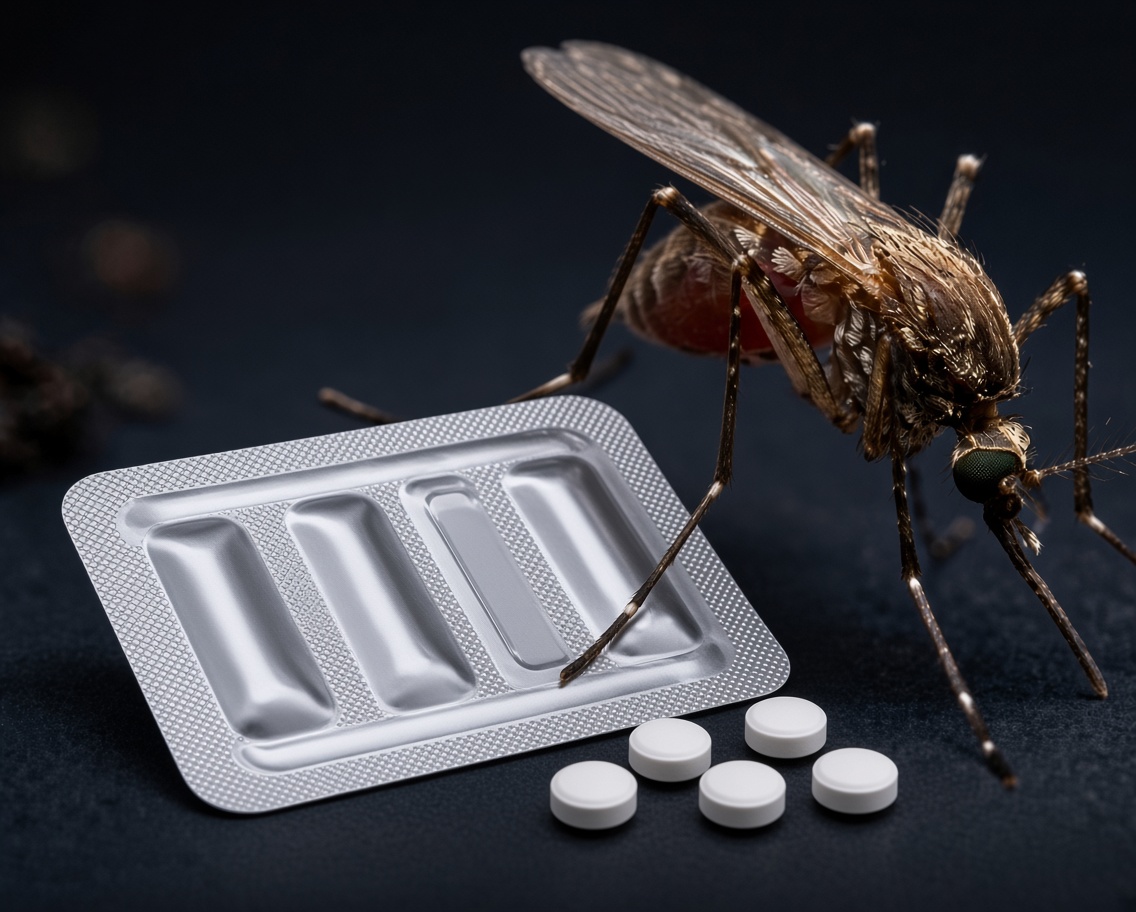
The new drug is called artesunate-pyronaridine, or ASPY for short.
It will be used alongside artemether-lumefantrine, or AL, the medicine Kenyan hospitals give to malaria patients.
"The Ministry of Health is introducing a new molecule ASPY that will be used across the country," said Dr Regina Kandie, Head of Diagnostics and Case Management at the National Malaria Control Programme, the Ministry of Health team that runs Kenya's fight against malaria.
ASPY, the new malaria drug, and how it differs from AL
Both drugs combine two medicines.
One works fast to cut the number of parasites in the blood, and the other works more slowly to clear the rest.
AL combines artemether with lumefantrine, while ASPY combines artesunate with pyronaridine.
ASPY has been tried in Kenya before.
A study of 197 children in Mbita, western Kenya, published in 2018, found it was well tolerated and worked at least as well as AL.
Why is Kenya introducing a new malaria treatment?
The change follows a study published on 5 October 2026 by researchers from the Kenya Medical Research Institute (KEMRI) and the Walter Reed Army Institute of Research Africa.
They tested 675 samples of malaria parasites taken from sick people between 2018 and 2024.
The samples came from eight hospitals in seven counties, covering four of Kenya's five malaria zones.
The researchers looked for small changes in the parasite's genes, the instructions that tell the parasite how to live and grow.
Some of these changes are known to help the parasite survive longer after treatment.
The World Health Organization (WHO) keeps a list of them.
Four changes from that list showed up in 25 of the 675 samples, about 4 in every 100. The most common, called A675V, was found in 20 samples.
The researchers reported that it became about five times more common between January 2023 and June 2024, rising from 0.6 per cent to 3 per cent of samples.
The other three changes appeared in only five samples between them.
What the researchers found in Baringo County
Baringo, a semi-arid county, had the most.
Of 71 samples tested there, 12 carried the A675V change, about 17 in every 100.
The WHO says that anything above 5 in every 100 places an area in its category of suspected partial resistance.
The researchers said this was the first such evidence in Baringo.
They noted that people in Baringo catch malaria less often each year than people in Kisumu and Busia.
A warning sign for malaria treatment, not a failed drug
The study mainly looked at the parasite's genes.
By the researchers' own account, it was not designed to show whether AL is failing in patients, or how quickly the parasites cleared after treatment.
The WHO explains that partial resistance means the parasites take longer to clear from the blood. When the second medicine in the mix still works, treatment rarely fails.
The WHO also says full resistance to artemisinin has not been reported.