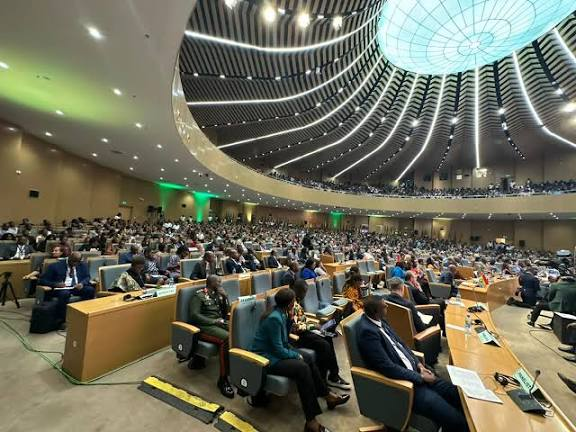
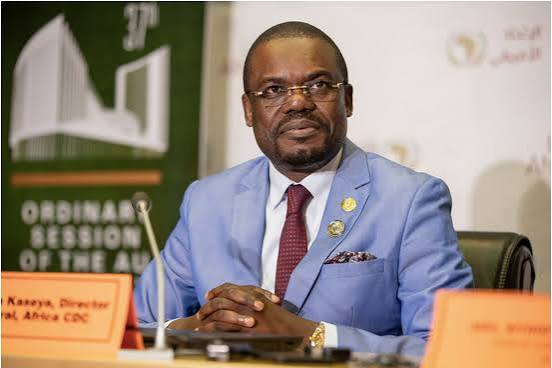
The board that oversees the Africa Centres for Disease Control and Prevention (Africa CDC), the African Union's public health agency, is due to discuss today, 22 November, whether its Director General, Dr Jean Kaseya, should get a second four-year term.
The AU's top decision-making body, the Assembly of heads of state, appointed him on 19 February 2023 for four years.
His current term ends in February 2027.
The meeting comes in the middle of a deadly Ebola outbreak.
As of 17 November, the European Centre for Disease Prevention and Control reported 11,504 confirmed cases and 5,630 deaths in DR Congo, which means about 49 of every 100 confirmed patients have died.
Africa CDC is helping coordinate the response alongside the World Health Organization, and Kaseya told Reuters on 15 November that the outbreak is "still not under control."
The board meets a day before Africa CDC's flagship public health conference, the International Conference on Public Health in Africa (CPHIA 2026), opens in Addis Ababa on 23 November.
The board does not have the last word
Africa CDC says the Director General serves a four-year term that can be renewed once, and that the AU Assembly endorses an appointment on the recommendation of the Committee of Heads of State and Government.
A second term would therefore be Kaseya's last.
Who sits at the table
The board has 19 members, ten of them health ministers.
Kenya’s Health Cabinet Secretary Aden Duale is one of eight newly nominated ministers, alongside those of Cameroon, Gabon, The Gambia, Namibia, Sierra Leone, Uganda and Zimbabwe who joined the board in rotation and attended orientation on 10 November.
North Africa had not yet named its two representatives.
Kenya has a stake on both sides of the meeting.
It reported nine Ebola cases, two of them fatal, as of 11 November, the European Centre for Disease Prevention and Control said, citing Kenya's Ministry of Health.
The other seven patients recovered and were discharged, and all identified contacts finished 21 days of quarantine.
Duale's office was asked on 22 November for comment on Kenya's position on the renewal and had not responded by the time of publication.
What the AU's ministers have already ordered
The AU Executive Council, made up of foreign ministers and other ministers named by member states, met on 28 and 29 July.
Its decision repeated a call for a formal investigation, within a set timeframe, into how Africa CDC used partner money held outside the AU's regular budget.
It urged Africa CDC and four other AU bodies to carry out every recommendation of a forensic and performance audit by the end of November 2026.
It also told Africa CDC to bring a recruitment plan to the AU's budget committee before the Council's January 2027 session.
The decision names no individual, and it also commended Africa CDC for its Ebola leadership and for progress on governance.
A petition to stop the renewal
A petition from senior staff is described in a Health Policy Watch report published on 16 November 2026 and updated on 18 November with Africa CDC's response.
Health Policy Watch is a Geneva-based health news outlet.
The petition urges the board and the AU Permanent Representatives Committee, which is made up of member states' ambassadors, not to reappoint Kaseya.
It says the April 2026 appraisal of his work, signed by AU Commission Chairperson Mahmoud Ali Youssouf, has legal and procedural problems.
The appraisal covers 2023 to 2026, though Youssouf took office in March 2025, and it was finished before the Ebola outbreak.
Outside observers quoted by the outlet expect the board process to be a virtual rubber-stamp.
Threats, leave and a 10-day suspension
The same report said eight highly placed sources, mostly current or former staff who spoke anonymously for fear of reprisals, told it Kaseya threatened two senior female AU diplomats, moved staff who question his decisions, and made appointments without proper procedure.