Joseph Mmwa LogoJOSEPH MMWA

If it's health, it's here

CPHIA 2026 in Addis Ababa: Dates, Programme, Fees, Visas and How to Take Part

African health leaders, scientists and policymakers are set to meet in Ethiopia, with pandemic preparedness, including how African countries can strengthen outbreak detection and response, among the key topics for discussion as the Ebola outbreak continues in the Democratic Republic of the Congo (DRC)

Updated on 14 min readAfrica
image

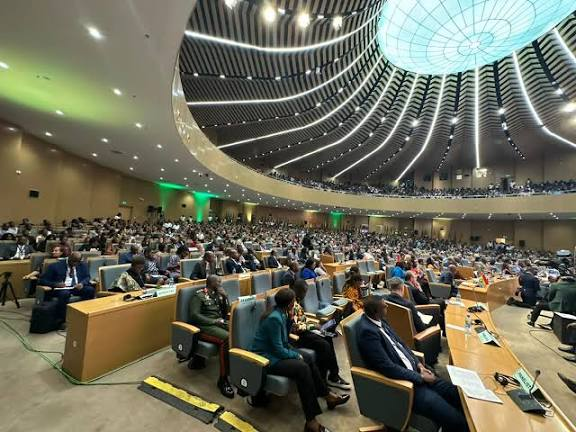
Photo:CPHIA 2023[Credit/File]

From Monday, thousands of health workers, scientists, government ministers and young people from across Africa are expected to gather in Addis Ababa, Ethiopia, to examine whether African countries can finance, manufacture and administer more of their own health care.

CPHIA 2026, the Fifth International Conference on Public Health in Africa, runs from Monday 23 to Friday 27 November 2026 at the Addis International Convention Center.

It is hosted by Ethiopia's government and the Africa Centres for Disease Control and Prevention, known as Africa CDC, which expects more than 30,000 people.

What CPHIA is

CPHIA is Africa CDC's flagship public health conference, where political leaders, scientists, health workers and young people meet to share evidence and plan action.

Africa CDC is a continental health agency linked to the African Union, and its mandate is to help countries detect and respond quickly to disease outbreaks.

This is the fifth edition.

The first was held online in December 2021, followed by Kigali in Rwanda in 2022, Lusaka in Zambia in 2023 and Durban in South Africa in October 2025.

Africa CDC counted nearly 20,000 participants at Durban, online and in person together, from more than 72 countries.

Dates and venue

The main conference takes place at the Addis International Convention Center in Addis Ababa, Ethiopia's capital and the home of both the African Union and Africa CDC.

Events before it start earlier, with a Youth Pre-Conference on 21 and 22 November.

Theme

The theme is "Africa's Health Security and Sovereignty." Africa CDC defines it as a transformation from health dependency and vulnerability to ownership and resilience.

The conference aligns with the Africa Health Security and Sovereignty agenda adopted by the 39th ordinary session of the African Union Assembly.

Africa CDC says the timing matters because external funding for health is becoming less certain while outbreaks keep testing health systems.

That is why the programme centres on how health care is financed, how more medicines and vaccines are made in Africa, and how countries prepare for the next outbreak.

Key issues for discussion

Africa arrives at CPHIA 2026 facing a widening gap between what its health systems are asked to do and what they can pay for.

Public health emergencies on the continent rose by 41%, from 152 in 2022 to 213 in 2024, according to Africa CDC.

Over roughly the same period, external health aid to Africa was projected to fall by about 70% between 2021 and 2025, and African governments were expected to spend $81 billion on debt service in 2025 alone.

The Addis Ababa agenda, from vaccine manufacturing to HIV, is built around closing that gap with African money, African institutions and African decisions.

The conference has made promises of this kind before.

CPHIA 2025 in Durban closed with the Durban Promise, which set five priorities: an African manufacturing revolution, innovative health financing, primary health care transformation, pandemic preparedness and response, and data ownership and governance.

In an opinion piece published on 17 November 2026, Africa CDC wrote that the Addis Ababa conference should be judged by whether it turns those priorities into delivery.

It organised the programme into six scientific tracks, each tied to a decision that governments and partners must take in the next few years.

The test of the week is whether commitments leave Addis Ababa attached to budgets and deadlines, and the issues below are where that test will be applied.

1.Health financing

At the centre of the discussions will be the question every other item depends on: who pays.

Sessions on 24 and 25 November will examine how governments can fund health from their own budgets, and the CPHIA Health Financing Pathway Compact is scheduled for discussion on 24 November.

Africa CDC's April 2025 financing paper sets out a three-pillar approach built on domestic resource mobilisation, innovative financing and blended finance, and names solidarity levies, such as taxes on airline tickets, imports and alcohol, as one innovative option.

The urgency is in the budget figures.

Only Botswana, Cabo Verde and Rwanda have met the Abuja target of allocating 15% of the national budget to health, a commitment made 24 years ago, and 30 African Union member states allocate less than 10%, according to Africa CDC.

The funding gap has direct consequences for healthcare delivery.

When governments cannot adequately finance their health systems, hospitals and clinics struggle to maintain staffing levels, buy essential medicines and provide routine services.

Disease-control programmes, including HIV, tuberculosis and immunisation, also face greater pressure when external funding declines.

With external aid projected to fall, how far governments can replace it will set the limits of everything else discussed this week.

2.Local manufacturing

A second central question is whether Africa can make the vaccines and medicines it uses.

Sessions on 24 and 25 November will cover manufacturing ambitions, medicine regulation and pooled procurement, meaning countries buying health products jointly, alongside the continental target of producing 60% of vaccine needs locally by 2040.

The reason is dependence.

A UNICEF and Africa CDC partnership release states that Africa imports 99% of its vaccines and between 70% and 90% of its medicines and medical devices.

COVID-19 showed what that dependence costs when global supplies are scarce, and the same exposure applies to every routine immunisation programme.

When international supplies are disrupted, African countries have limited control over how quickly they can obtain essential vaccines and medicines.

However, building manufacturing facilities alone will not solve the problem.

African manufacturers also need technology transfer, skilled workers, reliable demand, strong regulatory systems and procurement arrangements that allow locally produced vaccines and medicines to reach markets across the continent.

A September 2026 analysis in The Conversation Africa notes that sustainable vaccine manufacturing requires predictable demand, pooled procurement, technology transfer, skilled workforces and strong regulators, which explains why procurement and regulation share the agenda with the 2040 target.

3.Who leads global health

Influence over the institutions that shape health policy worldwide is another item on the programme.

Sessions on 24 November address reform of the global health architecture, consistent with the conference theme of moving from dependency to ownership, and on 23 November African health ministers are scheduled to meet candidates for WHO Director-General.

The timing matters because the WHO Executive Board will draw up a shortlist in early 2027, the World Health Assembly will appoint the Director-General in May 2027, and the new term begins on 16 August 2027.

The 54 WHO-recognised African countries make up nearly 30% of WHO's membership, according to Africa CDC.

That gives African countries a significant collective voice in decisions about who leads the organisation.

The next Director-General will help shape global health priorities, including responses to disease outbreaks, access to vaccines and medicines, and support for countries with weaker health systems.

Meeting the candidates before the field narrows is the point at which African priorities can still shape what they commit to.

4.Pandemic preparedness

Delegates will examine how Africa detects and contains outbreaks.

Sessions on 24 November cover continental pandemic preparedness, and those on 26 November address early warning systems, outbreak preparedness and community-centred public health institutions.

Infectious disease crosses borders, so weak surveillance or an underfunded laboratory in one country is a risk to its neighbours.

The ongoing Ebola outbreak caused by the Bundibugyo virus illustrates this risk.

As of 18 November 2026, the US Centers for Disease Control and Prevention (CDC) reported 11,680 confirmed cases and 5,715 deaths in the Democratic Republic of the Congo (DRC).

The outbreak has also affected Uganda, Kenya and Nigeria.

Uganda recorded 20 confirmed cases and two deaths, alongside one probable case and one probable death.

Kenya reported nine confirmed cases, including two deaths, while Nigeria recorded one confirmed case.

Uganda's outbreak has since been declared over, and Kenya and Nigeria have reported no new cases as they complete the 42-day monitoring period.

The patient identified in Nigeria was medically evacuated to Switzerland, recovered and was discharged from hospital on 11 November.

The DRC, however, continues to experience transmission, with the World Health Organization (WHO) reporting active cases across 48 health zones in eight provinces as of 17 November.

WHO has maintained that the outbreak remains a public health emergency of international concern.

The subject is pressing .

Emergencies on the continent are rising while external health aid is projected to fall, and pandemic preparedness and response is one of the five Durban Promise priorities.

5.Data, technology and climate

The 26 November sessions will take up digital health, artificial intelligence, data sovereignty and the implications of climate change for Africa's health security.

The question behind the first three is who owns, controls and benefits from African health data, which is why the Durban Promise named data ownership and governance as a priority.

The same Conversation Africa analysis notes that many immunisation programmes still rely on paper registers, so the quality of health data will decide how much digital tools and artificial intelligence can improve services.

Reliable digital records can help health authorities identify children who have missed vaccinations, monitor disease patterns and identify gaps in healthcare delivery.

Climate is on the same day's programme because it bears on where disease spreads and what health systems must plan for.

Changes in temperature, rainfall and flooding can affect the spread of infectious diseases, access to healthcare and the availability of essential services.

6.Immunisation and HIV

Vaccination and the HIV response, two programmes that Africa cannot afford to see weaken, form a further focus.

On 24 November the programme features the launch of the Continental Immunization Forum and the first Continental AIDS Monitoring Report, and sessions on 25 November return to immunisation and malaria vaccines.

Africa CDC's advisory does not describe what the report will contain.

It frames the conference as a chance to assess whether continental commitments are turning into sustainable financing and better services, which is the question both items raise.

Both matter because of the scale of the burden and because outside donors have paid for so much of the response.

UNAIDS reported in July 2026 that 1.2 million people acquired HIV worldwide in 2025 and 570,000 died of AIDS related illnesses, with sub-Saharan Africa accounting for about half of the new infections.

International HIV funding fell by 18%, the largest decline in almost two decades, and about 80% of HIV prevention funding in sub-Saharan Africa has come from international aid.

New infections rose in 21 countries in 2025, and about nine million of the 41 million people living with HIV were not on treatment.

Immunisation faces the same pressure.

About 7.1 million African children, or 15.6% of those under one year old, did not receive a single routine vaccine dose in 2025, according to UNICEF data cited in a September 2026 analysis in The Conversation Africa.

The analysis says vaccine-preventable outbreaks are increasing while donor budgets are under pressure and debt service squeezes government health spending.

A new forum and a first continental HIV report put these gaps in front of the ministers and financiers who will decide whether African budgets replace the lost external support.

The launch on 23 November of the African Union roadmap on the health of women, mothers, newborns, children and adolescents for 2026 to 2030 sets the continent's direction on related services for the rest of the decade.

7.Research and primary health care

The closing day, 27 November, will address African research and development, global health security and the future of primary health care, before the closing ceremony.

Primary health care is where most people first meet the health system, and its transformation is a Durban Promise priority.

Strong primary health facilities are also important for detecting unusual disease patterns, identifying potential outbreaks early and connecting patients to treatment before health emergencies spread.

Research faces the same funding pressure as services. NPR reported in July 2025 that trials in South Africa were being suspended for lack of funds after United States funding cuts.

Limited research funding also affects Africa's ability to develop its own medical evidence, conduct clinical trials, evaluate new treatments and contribute to the development of vaccines and diagnostics.

Countries that rely heavily on research conducted elsewhere may have less capacity to generate evidence that reflects their own populations and health priorities.

What is planned each day

22 November. A Women in Health Leadership Summit joins the youth meeting at Nelson Mandela Hall, African Union Commission.

Organisers aim to bring together 4,000 young people and 200 women leaders, and they hope to produce a Joint Leadership Declaration.

23 November. The opening ceremony, the launch of the African Union roadmap for the health of women, mothers, newborns, children and teenagers from 2026 to 2030, and two top level panels on leadership and on paying for health.

In the afternoon, a dialogue between African health ministers and candidates for Director-General of the World Health Organization, the United Nations' health agency, is scheduled.

24 November. Talks on how the global health system should change, how ready Africa is for future pandemics, and how to make more vaccines on the continent, with a target of producing 60% of the vaccines Africa needs by 2040.

The day also includes the launch of a Continental Immunization Forum, the first Continental AIDS Monitoring Report and discussions on the CPHIA Health Financing Pathway Compact.

25 November. Sessions on how governments can pay for health from their own budgets, making medicines locally, regulation and countries buying medicines together.

There is also a forum for African mayors and talks on primary health care, along with immunisation and malaria vaccines.

26 November. Digital health and artificial intelligence, who controls health information, how climate change threatens health, and spotting and preparing for outbreaks early.

27 November. African research, global health security and the future of primary health care, followed by the closing ceremony.

WHO Director-General candidates Face African health ministers

A ministerial dialogue with candidates for the position of WHO Director-General is scheduled for the afternoon of 23 November.

According to Africa CDC, the African Ministers of Health and Finance agreed to convene it in August 2026 through the Africa High-Level Ministerial Committee.

They did so after consultations with President Cyril Ramaphosa, the African Union Champion for Pandemic Prevention, Preparedness and Response, and Mahmoud Ali Youssouf, Chairperson of the African Union Commission.

Africa CDC says the dialogue is an equal platform for candidates to present their vision and respond to Africa's priorities, including the Africa Health Security and Sovereignty agenda.

Africa CDC's statement of 7 October referred to six announced candidates. WHO's official announcement on 29 October lists seven candidates proposed by Member States:

- Dr Hanan Mohammed Al-Kuwari
- Dr Hanan Balkhy

- Dr Hans Henri P. Kluge

- Dr María P. Neira

- Mr Budi Gunadi Sadikin

- Dr Li Song

- Dr Gevorg Tamamyan

The candidates addressed WHO Member States at the first candidates' forum at WHO headquarters in Geneva on 18 and 19 November.

At its 160th session in early 2027, the WHO Executive Board will decide on a shortlist of five candidates, interview them and nominate up to three to the World Health Assembly.

A second candidates' forum is set for 15 March 2027.

The Assembly will appoint the Director-General at its 80th session in May 2027, and the new Director-General takes office on 16 August 2027.

Who is expected to attend

Africa CDC says heads of state and government, ministers, scientists, public health leaders, innovators and young leaders are expected.

The conference website lists Abiy Ahmed, Ethiopia's Prime Minister, as a keynote speaker.

What it costs to attend

The official registration page lists fees of USD 200 for Africans and USD 400 for non-Africans, described as indicative. Students have their own category, and their fee is confirmed after a student ID review.

Registration happens in two steps: applicants apply on the official website, cphia.africacdc.org, and once approved they sign in to finish registration and pay.

The page lists five days of access, a certificate of attendance and recordings of sessions after the conference.

Regular registration closed on 6 November 2026.

Under the published refund policy, there are no refunds in the last 30 days before the conference.

Certain participants do not pay. Africa CDC fully sponsored selected young delegates at the Youth Pre-Conference and says it will arrange fee waivers for eligible journalists.

Visa and travel information

Africa CDC's FAQ says approved participants receive a conference invitation letter in their online registration account, and that the letter supports obtaining a visa on arrival in Ethiopia.

A valid passport is required, and entry is not allowed without one.

The letter does not guarantee entry, because final decisions rest with Ethiopian immigration authorities.

International participants are advised to fly into Addis Ababa Bole International Airport.

Hotels, transport and weather

Participants arrange their own hotels, and the organisers say they cannot take responsibility for bookings.

Conference transport is planned between selected hotels and the venue, with details to follow.

The conference travel page advises planning for temperatures of about 10 to 25 degrees Celsius in November. Addis Ababa runs on East Africa Time, and the local currency is the Ethiopian birr.

Warning on fraudulent offers

Africa CDC's FAQ warns against anyone who offers a guaranteed invitation, scholarship, visa or speaking slot in return for money.

Registration, payments and scholarships go through official Africa CDC and CPHIA channels only.

Media accreditation

Africa CDC welcomes journalists and media organisations from Africa and around the world.

The deadline for media houses to send the names of their journalists, photographers and camera crews was 20 November 2026, so it has passed.

Journalists who already have accreditation are asked to collect their badges early and bring valid identification.

Africa CDC says accredited media will have chances to cover the opening ceremony, selected high level sessions, exhibitions and interviews with leaders and researchers. Media questions go to communications@africacdc.org.

Online participation

Africa CDC will announce livestream and online attendance details closer to the conference, according to its FAQ, which was last updated on 5 September.

The registration page lists access to recorded sessions after the conference.

Deadlines that have already closed

Applications for sponsored places at the Youth Pre-Conference closed on 13 September, and abstracts for scientific research closed on 30 September.

Side event applications also closed on 30 September, and exhibition applications on 10 November.

Eligibility

Participants from outside Africa may attend. Africa CDC describes CPHIA as African-led with international participation, and members of the African diaspora are welcome.

The FAQ states that people working in research, policy, technology, manufacturing, media and other fields are welcome, and that employment in health is not required.

CPHIA 2026 opens on 23 November at the Addis International Convention Center, with registration through the official website and an invitation letter for approved participants.

Portrait of Joseph Mmwa, health journalistJoseph MmwaHealth & Medical Journalist

Share this story

Never miss health news that matters

Create a free account to follow stories shaping health in Kenya, Africa and around the world.

Comments

Be the first to comment.

Related Stories

Newsletter

The MMWA Briefing

Stay ahead of the health news shaping Kenya, Africa and the world. Get the week's most important developments, research and public-health stories — explained clearly and delivered to your inbox.