Joseph Mmwa LogoJOSEPH MMWA

If it's health, it's here

Nigeria Confirms First Case of Bundibugyo Ebola Virus

Nigeria now joins the Democratic Republic of the Congo, Kenya and Uganda in Africa in reporting confirmed cases of Bundibugyo Ebola during the ongoing outbreak

Updated on 4 min read
58447

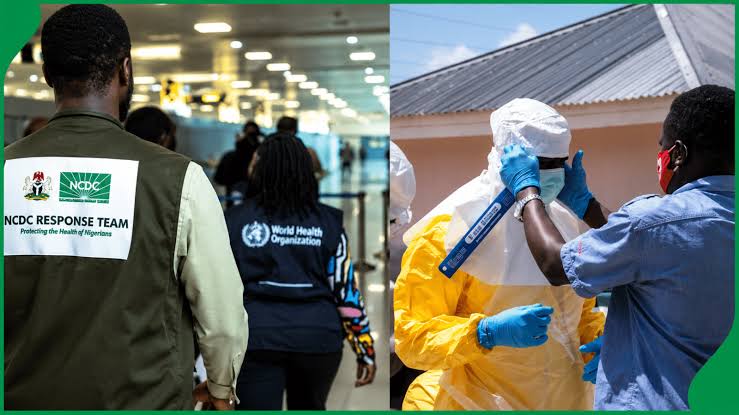
Photo:File(Naija News]

Nigeria has confirmed its first case of Ebola in the current outbreak, after a woman who recently flew in from Uganda tested positive in the capital, Abuja.

Professor Muhammad Pate, Nigeria's Coordinating Minister of Health and Social Welfare, announced the result at a news conference on Tuesday, 20 October 2026 saying laboratory tests confirmed the infection the same day.

Pate called it "a contained case" and said the woman is in isolation and receiving medical care.

Health teams have identified 44 close contacts and are tracing others who may have been exposed.

The virus involved is Bundibugyo, one type of Ebola.

In the Democratic Republic of the Congo, where this outbreak began, the United States Centers for Disease Control and Prevention (CDC) counted 9,552 confirmed cases and 4,602 deaths as of 18 October.

A positive test in Abuja

The woman arrived in Nigeria on an international flight from Uganda.

The Associated Press reported that her symptoms began on 7 October and that she was admitted to a private hospital in Abuja on 11 October, before the Ebola diagnosis was made.

Pate said she was treated there for several days before the infection was confirmed.

The accounts available so far do not say where she caught the virus, and a flight from Uganda does not on its own show that she was infected there.

CDC data show Uganda had 20 confirmed cases and two deaths earlier this year, with its last confirmed patient released from care on 16 July and no active cases reported as of 18 October.

Her age and current condition were also not given in the reports reviewed.

Forty four people on the list

Contact tracing means finding everyone who was close to a sick person and keeping watch on them for signs of illness.

Pate said the 44 contacts include health workers, patients, caregivers and people who travelled with her, and teams are still looking for others.

He also asked airline passengers who are contacted to give the information requested and follow public health advice.

The private hospital that treated her is receiving immediate support to strengthen infection prevention and control, which means the steps that stop a germ from passing from one patient or worker to another.

Pate asked every public and private health facility in Nigeria to stay alert and to isolate suspected cases quickly.

What the minister told Nigerians

Pate said Ebola spreads through direct contact with the blood or body fluids of a person who is sick or has died of it, and through contaminated materials.

He listed fever, severe weakness, headache, vomiting and diarrhoea as symptoms to watch for.

He said people who think they may have been exposed should report to public health authorities at once, even if they feel well.

Anyone who develops symptoms should avoid close contact with others and call the authorities for guidance before going to a health facility.

The Nigeria Centre for Disease Control and Prevention (NCDC) runs a free line, 6232, open 24 hours a day, seven days a week.

Pate also warned against rumours and against stigmatising the sick, and asked people to rely on official information.

A test Nigeria has faced before

In July 2014, a Liberian government official flew into Lagos while ill and died days later in a private hospital.

Agence France-Presse reported that two doctors and two nurses who treated him, along with an official of the Economic Community of West African States who met him at the airport, also died from the disease.

Pate recalled on Tuesday that Nigeria contained that outbreak and said the country has the experience and systems to respond again.

There was some warning this time.

On 6 October, after Kenya confirmed its first imported case, NCDC Director General Dr Jide Idris said the agency was reviewing Nigeria's risk and preparations.

NCDC said it had already run a national tabletop exercise, a practice run on paper of how the country would respond to an imported case.

CDC data as of 18 October list eight confirmed cases and one death in Kenya.

A strain without an approved vaccine

The World Health Organization (WHO) says no vaccine or specific treatment has been approved for Bundibugyo.

Most earlier outbreaks involved a different type, called Zaire, and the licensed vaccine, Ervebo, was made for that type.

WHO's expert advisers said on 19 August that it is still unknown whether Ervebo protects against Bundibugyo, so it should only be used against this strain inside a research study.

Front line health workers in the Democratic Republic of the Congo are receiving it under such a study, and a separate trial of possible treatments had enrolled more than 300 confirmed patients by September.

WHO says outbreak control therefore rests on finding cases quickly, isolating and caring for patients, and tracing their contacts.

What is still unknown

The main open question is whether any of the 44 contacts, or anyone else, has been infected.

WHO says symptoms can appear anywhere from two to 21 days after infection, so the answer will take time.

Pate said the Presidential Taskforce on Ebola Virus Disease and NCDC will give further updates.

Whether this stays a single contained case, as the government describes it, will depend on what the coming weeks show for those 44 contacts and the others still being traced.

Sources:Folasade Akpan, News Agency of Nigeria, 20 October 2026; Associated Press, 20 October 2026; CDC, Ebola Outbreak: Current Situation, 19 October 2026; WHO, Disease Outbreak News, 10 September 2026; NCDC statement, 6 October 2026; Agence France-Presse via IOL, August 2014

Portrait of Joseph Mmwa, health journalistJoseph MmwaHealth & Medical Journalist

Share this story

Never miss health news that matters

Create a free account to follow stories shaping health in Kenya, Africa and around the world.

Comments

Be the first to comment.

Related Stories

Newsletter

The MMWA Briefing

Stay ahead of the health news shaping Kenya, Africa and the world. Get the week's most important developments, research and public-health stories — explained clearly and delivered to your inbox.