Ebola has reached an eighth province in the Democratic Republic of Congo, and it arrived within days of health workers in the east of the country receiving a vaccine made for a different strain of the virus.
The Health Ministry said on Sunday 18 October that two men in their 20s tested positive in North Ubangi, a province in the northwest that borders the Central African Republic.
One of them died.
It is the first time the outbreak has been confirmed there.
Both men lived in the Wapinda health zone, a local health district next to Bas-Uele province, where Ebola had already been found.
Reuters reported the cases on Thursday 15 October, citing health officials, before the National Institute for Biomedical Research confirmed them.
Africanews reported that a series of suspected deaths in the area had prompted the testing.
North Ubangi now sits alongside Ituri, North Kivu, Haut-Uele, Tshopo, South Kivu, Bas-Uele and South Ubangi.
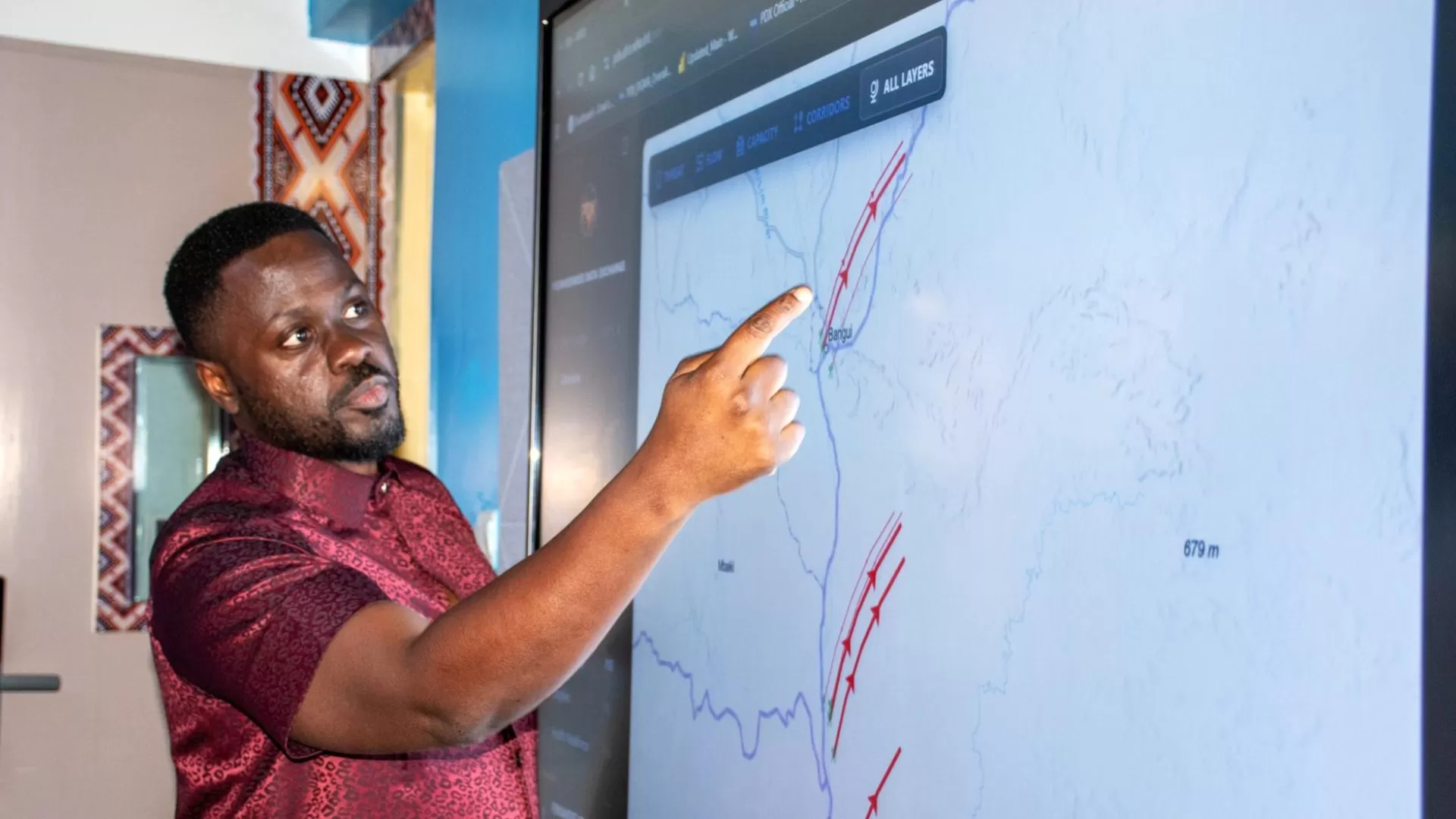
The Central African Republic has not recorded a confirmed case, according to the Associated Press, but reaching the area is difficult.
Roads are poor, phone and internet links are limited, and armed violence across the border has pushed thousands of people into Congolese border communities.
The outbreak was declared in mid May and is caused by Bundibugyo virus, a rare species of Ebola with no approved vaccine or treatment.
As of 19 October, the European Centre for Disease Prevention and Control counted 9,552 confirmed cases and 4,602 deaths in DR Congo, using data up to 18 October.
That means close to half of confirmed patients have died, though 937 people were still being treated in isolation.
Ituri province in the east accounts for 6,960 of the cases, nearly three out of every four.
The Associated Press called it the deadliest Ebola outbreak in the country's history and the fastest growing on record.
For scale, Africanews reported that the 2014 to 2016 epidemic in West Africa, the largest ever, killed more than 11,000 people.
Mohamed Janabi, the World Health Organization's Regional Director for Africa, told the Associated Press in Beni on Friday that pockets of the disease are generally going down, but "geographically it's spreading out."
He said one of the biggest challenges is persuading sick people to seek care, and that some deaths happen in the community, outside health centres.
The Associated Press also reported that the spread is fuelled by large movements of people, rebel violence, mistrust and poor working conditions for frontline workers.
Community engagement has helped in some places.
Serge Ngalebato, an epidemiologist coordinating the response in the Wamba health zone in Haut-Uele province, said health workers began visiting homes because people feared hospitals.
Early resistance eased, and residents started reporting cases themselves.
Authorities in North Kivu are also limiting movement.
Congo's state news agency reported that from Monday 19 October, people are barred for one week from entering the province from Ituri.
Motorcycles may carry no more than two people, cars no more than four, and large gatherings such as sports events, nightclubs and political demonstrations are suspended.
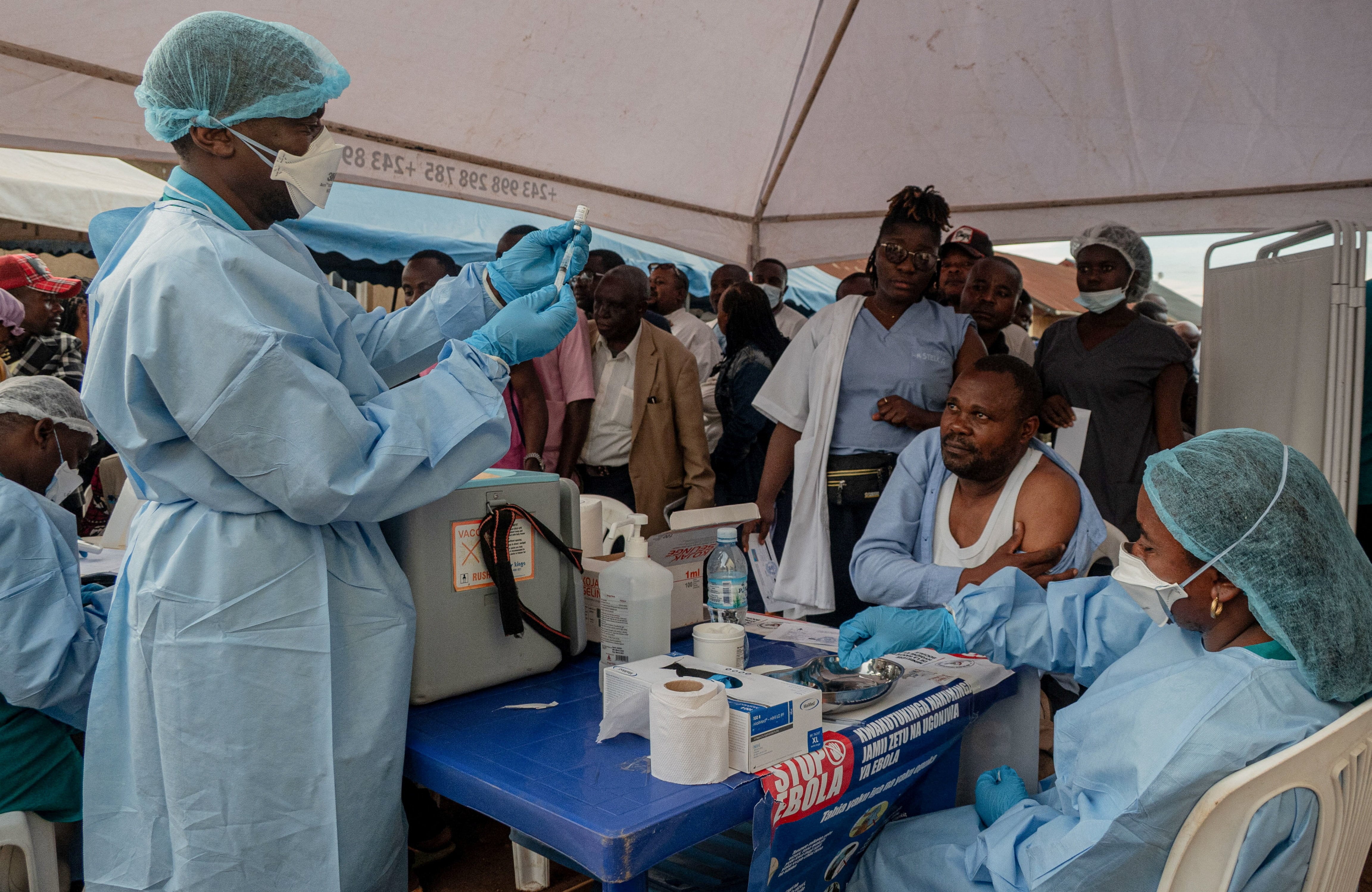
On Friday 16 October, health workers and other frontline responders in Beni, a city in North Kivu province, queued for doses of Ervebo, made by the drug company Merck.
Janabi said the Beni launch falls under a compassionate use framework, which means the vaccine is offered because of the emergency, before it has been proven for this strain.
He said the national effort began in the city of Kisangani on 27 August and that more than 9,000 frontline workers have been vaccinated so far.
Ervebo is licensed for the Zaire species of Ebola, a different species from the one behind this outbreak, and it worked well in earlier outbreaks.
The World Health Organization has said it is not known whether the vaccine protects people against Bundibugyo, though early tests outside people suggest it may give some protection.
A WHO-backed expert panel recommended in September that Ervebo first be used for research only, and that its unknown effectiveness be clearly explained to those receiving it.
The position resembles a key cut for one lock being tried on a neighbouring door.
The two viruses are related, so there is hope it turns, but nobody can yet say.
Of 70,000 doses approved for DR Congo in August, 50,000 are meant for frontline workers and 20,000 are set aside for a study of whether the vaccine works against Bundibugyo, according to the World Health Organization and the Africa Centres for Disease Control and Prevention(Africa CDC)
Health workers come first because they are often among the first people hit in an Ebola outbreak, which the World Health Organization has said can mean avoidable deaths, fewer staff to treat patients, and spread to other patients.
The vaccine is not new to the region: the organisation reported that 18,748 frontline and health workers in North Kivu were vaccinated as a precaution between June and September 2023.
United Nations News reported that severe side effects from Ervebo have been very rare in earlier trials.
Kenya's Health Ministry confirmed a ninth case on Tuesday 20 October, a close family member of the first patient who was already in quarantine.
Director General for Health Patrick Amoth said all nine cases belong to one cluster, with no evidence of spread outside it, and that 134 of 135 contacts had been traced and quarantined.
The ministry said the eight surviving patients are responding to treatment.
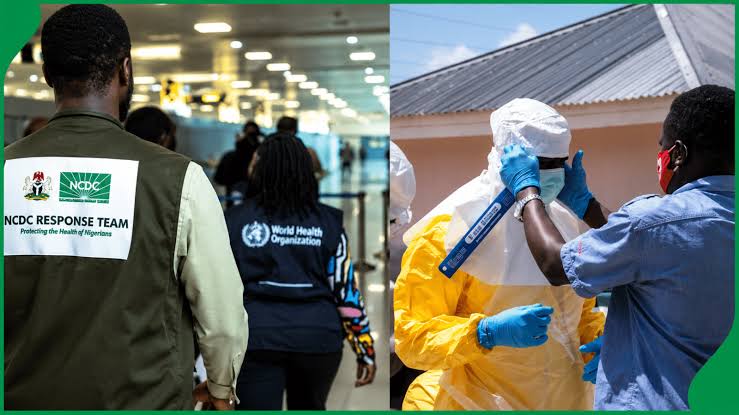
Nigeria confirmed its first case on the same day.
The patient is a woman who arrived on an international flight from Uganda and was admitted to a private hospital in Abuja, the capital, according to the country's Health Ministry. Uganda, which also had cases, has since declared itself free of the disease, the Associated Press reported.