Joseph Mmwa LogoJOSEPH MMWA

If it's health, it's here

Africa CDC Calls Health Ministers to Urgent Meeting as Ebola Reaches Fourth African Country

The agency says the meeting will let them assess the situation, strengthen coordination across borders, speed up support to affected countries and reinforce preparedness

Updated on 4 min read
africa cdc

Africa's health ministers have been called to a virtual meeting on Wednesday, 28 October 2026, after Ebola reached Nigeria, which became the fourth African country to confirm a case of an outbreak that began in the Democratic Republic of the Congo (DRC) in May.

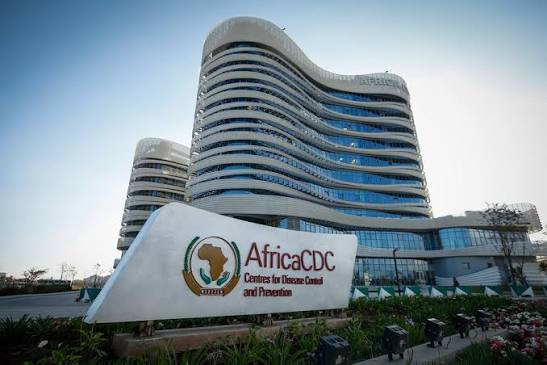
The Africa Centres for Disease Control and Prevention (Africa CDC), the African Union's public health agency, announced the meeting in a statement on 21 October and said the spread across Central, Eastern and Western Africa demands urgent and coordinated action.

Why ministers, and why now

Ministers of health head their governments' health services, which makes them the officials who can commit their countries to the steps Africa CDC is asking for.

The agency said the meeting will let them assess the situation, strengthen coordination across borders, speed up support to affected countries and reinforce preparedness in countries that have not yet had a case.

Coordination across borders matters because the virus has already crossed several.

The first patient in Kenya had been living in the DRC, travelled by road to Kampala, Uganda's capital, and then flew to Nairobi, so he passed through three countries before he was tested.

The talks will also feed into a summit of Heads of State and Government led by President Évariste Ndayishimiye of Burundi, the current Chairperson of the African Union.

Africa CDC did not say when that summit will take place.

Five months in, still growing

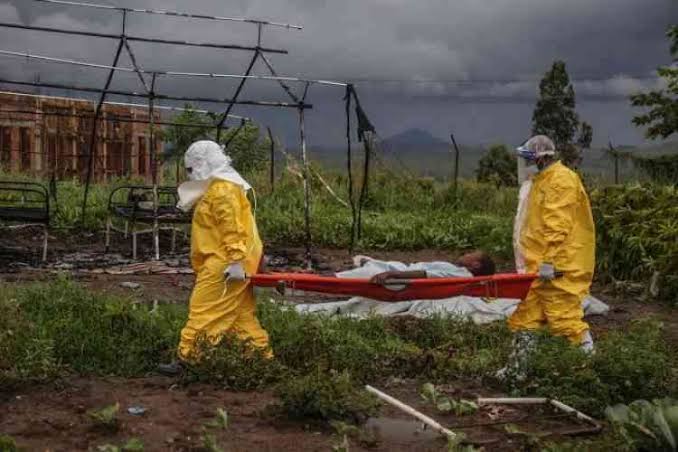
The outbreak is caused by the Bundibugyo virus, one of the viruses that cause Ebola disease, and no vaccine or treatment has been approved for it.

The DRC declared the outbreak on 15 May 2026 after laboratory tests confirmed the virus in Ituri province, in the east of the country.

Africa CDC declared a Public Health Emergency of Continental Security on 18 May, an emergency declaration covering the whole continent.

As of 18 October, the European Centre for Disease Prevention and Control counted 9,552 confirmed cases and 4,602 deaths in the DRC.

That means close to half of the confirmed patients have died.

Ituri province accounts for 6,960 of the cases, nearly three in every four.

The Associated Press has called it the deadliest Ebola outbreak in the country's history.

The outbreak is also still reaching new places inside Congo.

On 18 October the DRC's Health Ministry confirmed two cases in North Ubangi, a north-western province bordering the Central African Republic.

Both patients were men in their 20s, and one of them died.

It was the eighth province affected.

Two flights, two capitals

Uganda was the first country outside the DRC to report cases and declared itself free of the disease on 28 July 2026.

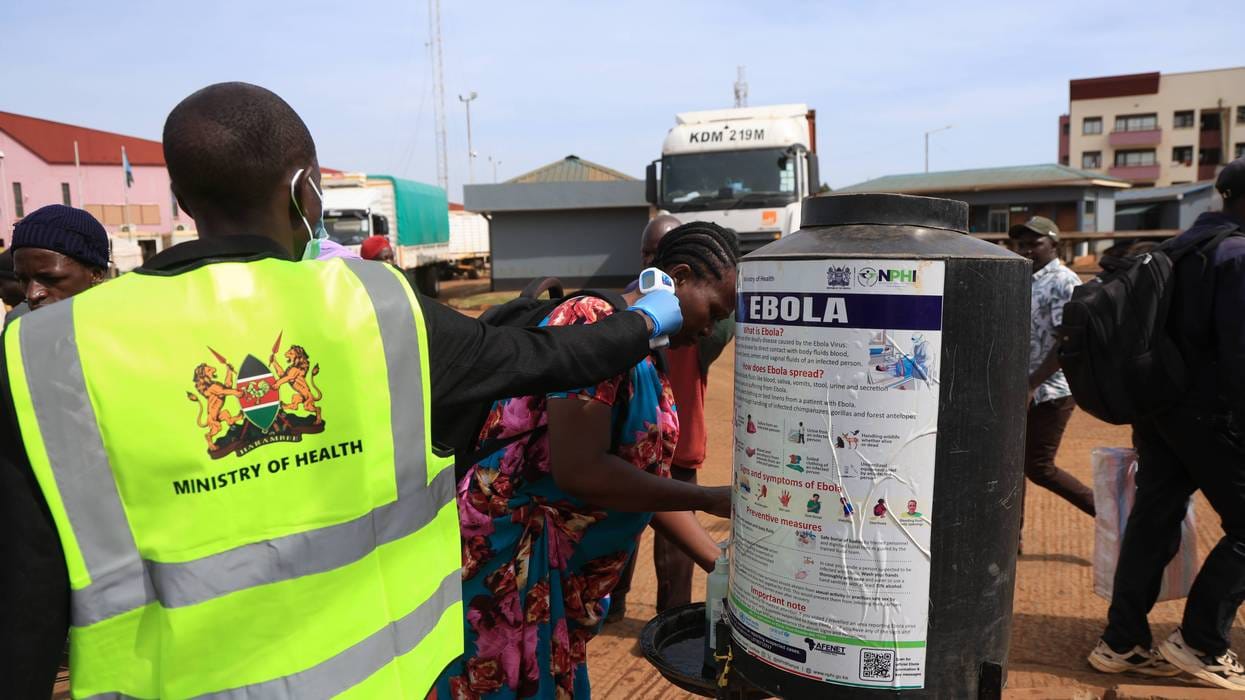
Kenya confirmed its first case on 6 October, and its Health Ministry confirmed a ninth case on 20 October, a close family member of the first patient who was already in quarantine.

Nigeria confirmed its first case the same day, in Abuja, the capital.

The patient is a woman who arrived on a flight from Uganda.

Nigeria's Federal Ministry of Health said she began showing symptoms on 7 October and was admitted to a private hospital on 11 October, where she was diagnosed.

Tests by the Nigeria Centre for Disease Control and Prevention identified the Bundibugyo strain, and the World Health Organization confirmed it.

Finding everyone who came close

Ebola spreads through direct contact with the body fluids of a sick person, or with materials they have touched, and Nigeria's public health agency has said it does not spread through the air.

For that reason health teams trace contacts, meaning they find everyone who spent time close to a patient and watch their health for 21 days.

Health Minister Muhammad Pate said 44 people who had contact with the woman in Abuja are being traced.

In Kenya, Patrick Amoth, the Director General for Health, said all nine cases belong to one cluster, with no evidence of spread outside it, and that 134 of 135 contacts had been traced and quarantined.

The ministry said the eight surviving patients are responding to treatment.

What Africa CDC is asking countries to do

The agency called on all member states to strengthen vigilance, surveillance, cross border cooperation, community engagement and the protection of frontline health workers.

That means staying alert for possible cases, testing and counting them early, sharing what is found with neighbouring countries, working with local communities, and keeping the doctors and nurses who treat patients safe.

Dr Jean Kaseya, Africa CDC's Director General, said Ebola "is crossing borders" and that the response must move faster, with stronger coordination, greater solidarity and decisive political leadership.

He added that the continent has the expertise and capacity and must use them together.

Nigeria has done this before

In July 2014, an ill traveller arrived in Lagos with Ebola.

By 24 September that year, Nigeria had recorded 20 cases, 19 of them confirmed by laboratory tests, and eight deaths, with no new case since 31 August.

The US Centers for Disease Control and Prevention credited an emergency operations centre, set up within days, for coordinating that response.

It was a different outbreak, but it shows what fast detection and tight coordination achieved in Nigeria's own hospitals.

What has not been announced

Africa CDC's statement does not say what decisions the ministers will be asked to take, how much money may be involved, or when the heads of state will meet.

Officials have so far reported one confirmed case in Nigeria, and the 44 contacts there are still being followed.

What is known is that the outbreak has now been confirmed in four countries across three regions of Africa: the DRC in the centre, Uganda and Kenya in the east, and Nigeria in the west.

View sources
  • Africa CDC

    Press Release

Portrait of Joseph Mmwa, health journalistJoseph MmwaHealth & Medical Journalist

Share this story

Never miss health news that matters

Create a free account to follow stories shaping health in Kenya, Africa and around the world.

Comments

Be the first to comment.

Related Stories

Newsletter

The MMWA Briefing

Stay ahead of the health news shaping Kenya, Africa and the world. Get the week's most important developments, research and public-health stories — explained clearly and delivered to your inbox.