.jpeg&w=3840&q=75)
Papua New Guinea Launches HPV Vaccination to Protect Girls from Cervical Cancer
Cervical cancer is the leading cause of cancer death among Papua New Guinean women
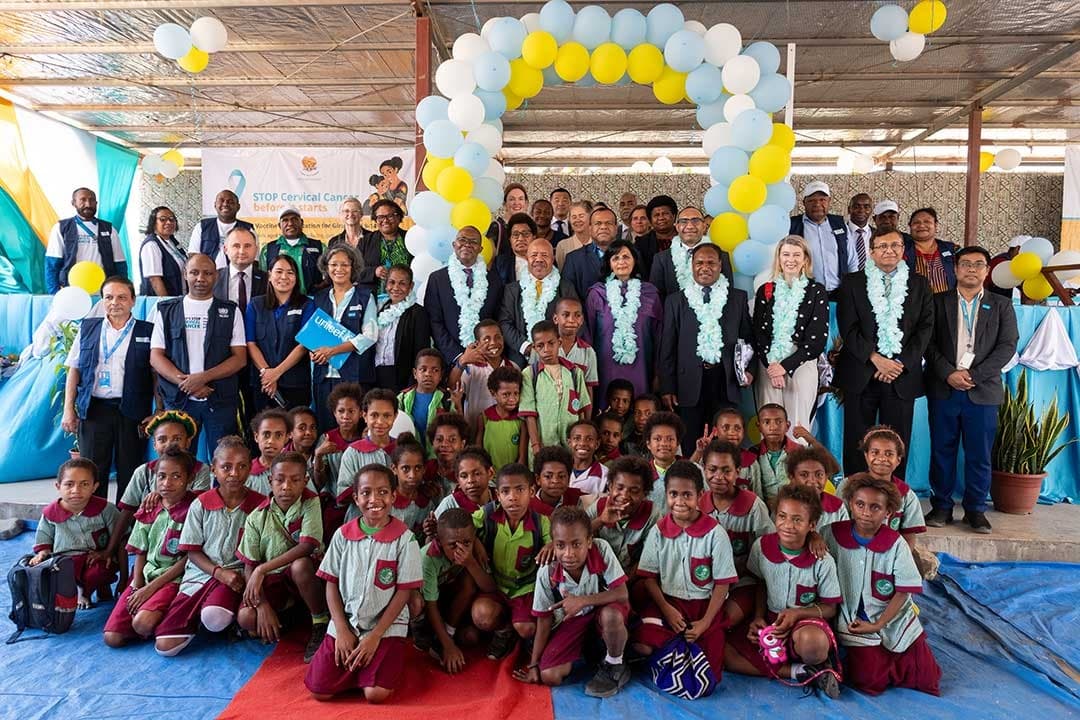
Photo:Gavi,The Vaccine Alliance
Papua New Guinea has begun rolling out HPV vaccination nationwide, giving girls a shot at avoiding the cancer that kills more of the country's women than any other.
Health workers delivered the first doses at a launch event at New Erima Primary School in Port Moresby, the capital, to girls aged 9 to 14, the age range the vaccine works best for because it is given before most exposure to the virus that causes the disease.
Gavi, the Vaccine Alliance, and Papua New Guinea's National Department of Health announced the launch on 8 September 2026, describing it as a step toward protecting future generations from cervical cancer.
Human papillomavirus, or HPV, is a common sexually transmitted virus, and more than 95% of cervical cancer cases trace back to it.
The single dose being given in Papua New Guinea protects against the specific HPV strains responsible for up to 90% of those cases.
Cervical cancer is diagnosed in more than 1,000 women a year in the country and kills about 650, a toll independently matched by the World Health Organization-affiliated HPV Information Centre.
That makes it the leading cause of cancer death among Papua New Guinean women.
A free phase of the rollout starts in November 2026 across the National Capital District and Central Province before expanding to the rest of the country.
Create a free account
Join Joseph Mmwa and be the first to know the world's biggest health and medical stories as they happen
Health officials are aiming to reach about 60,000 eligible girls in this first phase.
Because most of the vaccination will happen in schools, the campaign will also run through health facilities and community outreach, so that girls who are out of school or live far from health services are not left behind.
The National Department of Health is leading the rollout with the National Department of Education and provincial health authorities, and the vaccine itself is being funded and supplied with support from the Australian Government, Gavi, the World Health Organization and the United Nations Children's Fund, or UNICEF.
Papua New Guinea joins more than 162 countries that have added HPV vaccination to their immunisation programmes since the first vaccine was approved in 2006.
With Gavi's support, the alliance says 95 million girls in lower and middle income countries have already received it, a rollout it credits with helping avert an estimated 1.9 million future cervical cancer deaths.
Vaccination is one of three pillars in the World Health Organization's global strategy to eliminate cervical cancer, alongside screening and treatment for women already exposed to the virus.
That means the new vaccine protects the next generation of girls, while access to screening and treatment for adult women remains a separate, ongoing challenge in many lower income countries.
The vaccine cannot help women who have already been exposed to HPV or already have cervical cancer, and health officials have said the programme's real impact will depend on how many of the roughly 60,000 eligible girls it actually reaches, especially those living far from Port Moresby, once this first phase runs its course.
Originally reported by Gavi — The Vaccine Alliance. View original source

Related Stories
Australia to End Free COVID-19 Vaccines for Most People From October 1
WHO Approves New RSV Vaccine Vial to Protect More Babies Globally

Measles Eradication Impossible Due to Vaccine Hesitancy in Wealthy Nations, Bill Gates Says
New Generation of TB Vaccines Could Save 7.3 Million Lives by 2050, Gavi Says
Comments
Be the first to comment.